

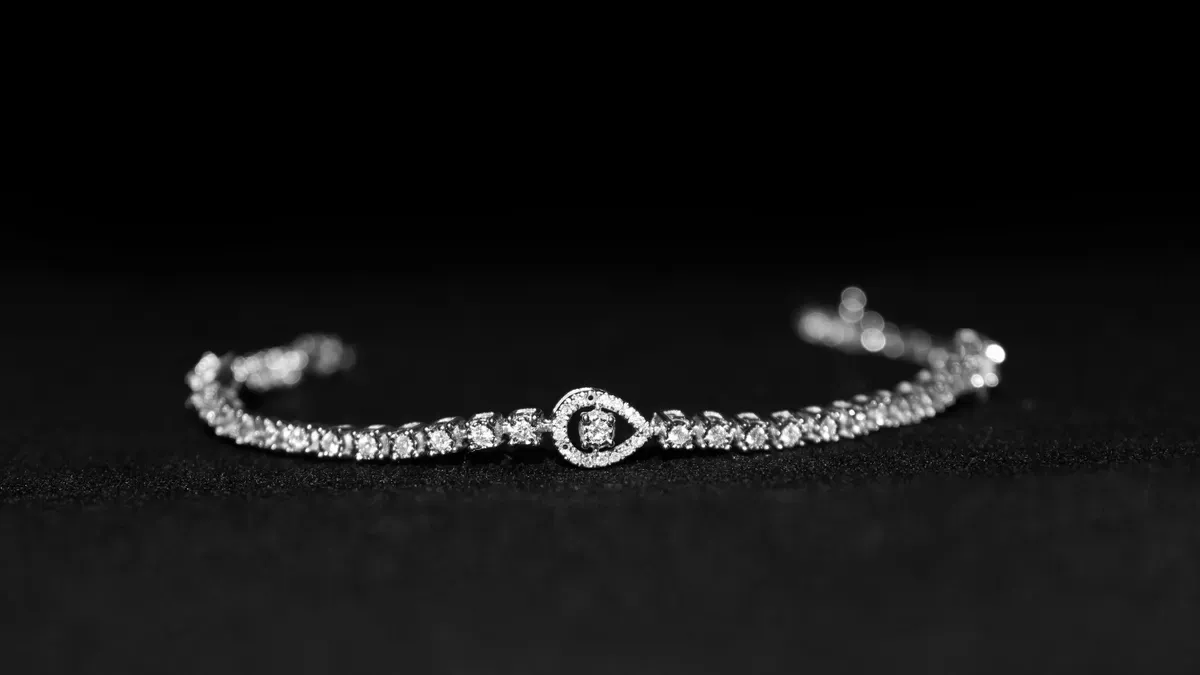
Layer moissanite chains and pendants by comparing their lengths, widths and textures.
Start with a shorter chain and a longer layer so you can see each piece.
Choose finish tones you like together.
Mix thin chains with thick chains.
Check the proportions and the space at your neckline.
Styling tip: A plain shirt makes it easier to see the chain outlines.
A tennis chain gives a continuous row of stones, while a Cuban or rope chain provides a different texture. A pendant adds another focal point. Compare the pieces together before choosing the combination.
Wear a thin chain higher up.
Put a detailed moissanite pendant lower down.
Check how the pieces sit with the clothes you plan to wear.
If you add a watch, decide whether it or the neckwear should be the focal piece.
Leave room between accessories so they do not rub together.
Key Takeaways
Layer your chains by placing shorter ones higher up and longer ones lower down.
- Coordinate your finish tones if you like a uniform look, or repeat a contrasting tone deliberately.
- Read the actual stone, metal, finish and dimensions for each piece.
- Follow the care instructions for the metal, plating and any treated stones.
Styling Moissanite Tennis Chains and Custom Chain Stacks
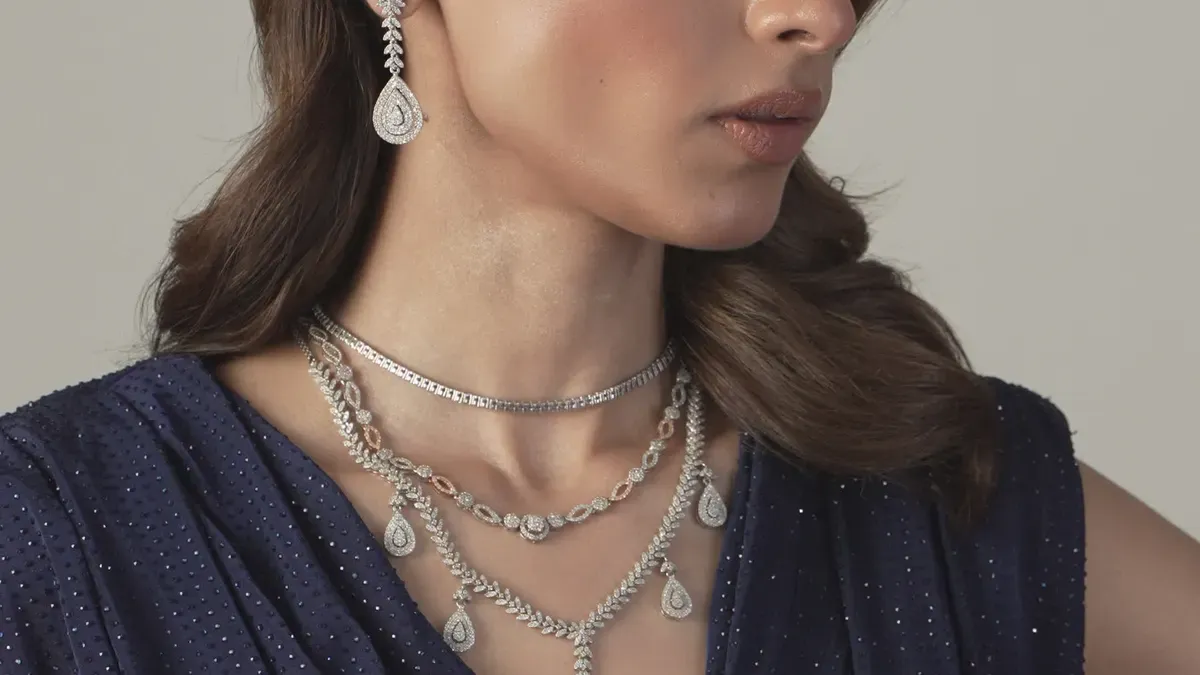
Choose the amount of sparkle for the outfit. A plain T-shirt lets the chain outline stay visible, while a shirt or jacket changes the available space at the neckline.
Wear one chain alone when you want a simpler look. Add another texture or a pendant when you want more detail.
Styling tip: Try the combination with the clothing you expect to wear before adding another layer.
Selecting Chain Lengths and Width Proportions
Different lengths create space between the chains. Try them together, because width, body proportions and a pendant can change how they sit.
Use these simple rules to layer right:
- Two-chain example: compare a 20-inch chain with a 22-inch chain, then check the actual spacing on your neckline.
- Three-chain example: compare progressively longer lengths and check the combined weight and drop.
- Spacing: a 2-inch difference is a starting point, rather than a guarantee that the pieces will stay separated or avoid tangles.
Try a finer chain above a wider one, then reverse the order if you prefer the look. Pendants and neckline shape can change which arrangement works best.
Check the actual weight of the pieces and choose the level of coverage you are comfortable wearing.
Stacking Tennis Chains with Cuban Links
Mix chain types for bold shine. Tennis chains feature straight stone rows. Cuban links feature heavy metal loops. Stack both styles for maximum impact.
Compare a shorter stone row with a longer metal-link chain. The contrast comes from the continuous stones and the shape of the links, rather than a guarantee about how light will reflect.
| Combination | Shorter layer example | Longer layer example | What to check |
|---|---|---|---|
| Finer outline | 18-inch 3 mm tennis chain | 22-inch Cuban link | Spacing, actual weight and neckline |
| Wider outline | 20-inch 5 mm tennis chain | 24-inch Cuban link | Coverage, fit and combined weight |
| Pendant focus | A fine chain without a pendant | A compatible chain with a pendant | Bail clearance, clasp and permitted pendant weight |
Compare the finish tones across the pieces. Read the base metal and finish separately:
- 925 sterling silver: a base-metal description; any plating should be stated separately.
- Gold-tone plating: a surface finish over the stated base metal, rather than solid gold.
- Rose-gold tone: an appearance to coordinate with your other pieces; check the actual material description.
You can use one finish tone for a uniform look or repeat contrasting tones across the outfit. Follow the care instructions for each piece rather than assuming a coordinated finish will wear permanently.
Pairing a Moissanite Pendant with Custom Chains
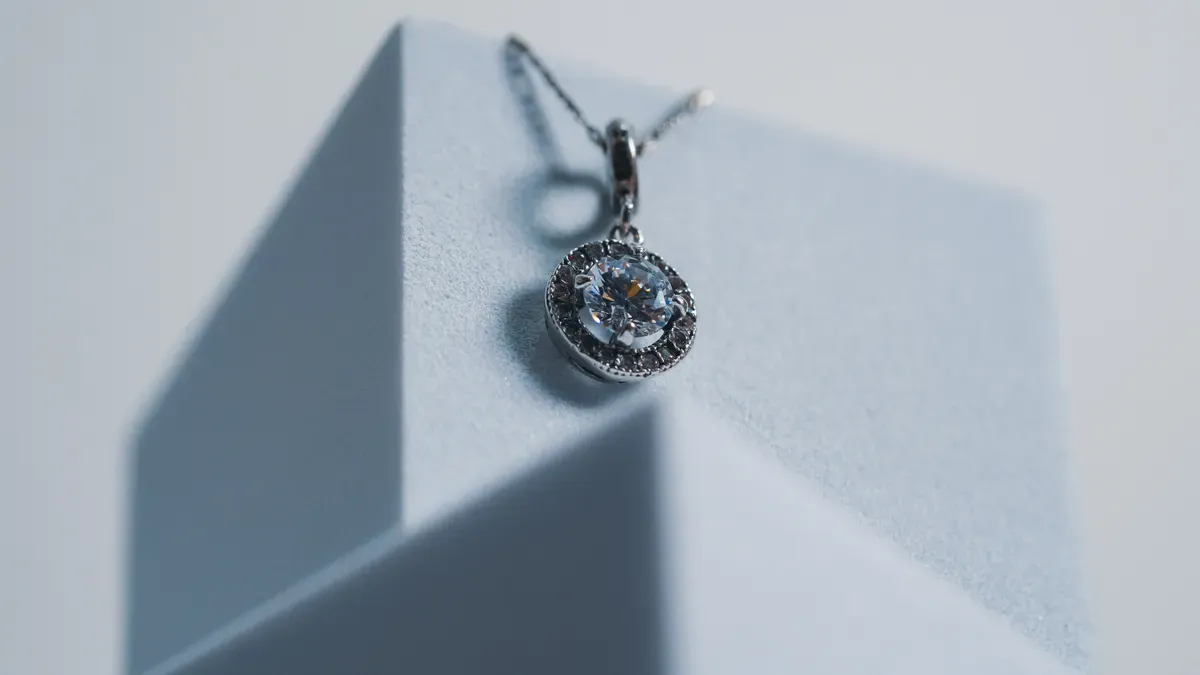
Compare the pendant with the chain’s width and length. A detailed pendant may work well with a plain chain, while a simpler pendant leaves more visual space beside a stone-set chain.
Fit tip: Check the internal bail dimensions, chain cross-section and clasp clearance before pairing the pieces.
Matching Pendant Bails to Chain Thickness
The bail is the loop at the top of the pendant. Compare its internal opening with the thickest part of the chain or clasp that must pass through it.
Follow these simple sizing rules:
Measure Width: Measure chain width in millimeters.
- Check clearance: compare both width and depth, including any part of the clasp that must pass through.
- Check weight: ask whether the chosen chain and clasp suit the pendant’s weight.
These details help establish compatibility. A visual width match alone does not guarantee that a pendant fits or that the chain can carry it.
Designing Bespoke Nameplates and Jesus Pieces
For a custom nameplate or symbol, send the team the design idea, dimensions and chain you want to pair it with. Confirm the stones, metal and bail in the design brief.
Confirm the production schedule and shipping estimate for your approved design. Material, complexity and the design review can affect the project, so use the quote for the specific piece.
The Sommarnox CAD deposit starts the design stage and can be applied toward the approved order. Confirm the design before production details are finalized.
Coordinating a Watch with Neckwear
A stone-set watch and a layered neckline can both attract attention. Choose one main focal point and use the other pieces to repeat a finish or shape. Check the actual watch description instead of treating a style reference as a brand-authenticity claim.
Wrist Stacking Strategies for Iced-Out Timepieces
If you wear a watch beside a bracelet, check their fit and where the edges touch. Moving one item to the other wrist can help keep them apart.
Follow these simple rules for safety:
Wear on the opposite wrist: Place thick bracelets on your other arm. This step keeps pieces separated safely.
Maintain a physical gap: Choose thin bracelets for one wrist. Place thin items above your watch. Keep a tiny gap between them.
Check the arrangement during wear; spacing reduces contact but does not guarantee protection from scratches.
Watch tip: Follow the fit guidance for the actual watch rather than tightening it just to stop contact with a bracelet.
Balancing Wrist Coverage with Neckline Sparkle
Balance total shine for clean outfits. Too many gems can look bad. Match wrist stones with chest gems.
Pick one main focus point daily. Wear simple chains with big watches. Wear small watches with heavy pendants. This contrast helps each item shine. Match all your metal colors well. Gold pairs best with gold tones. Silver fits white metals very nicely. Master these rules for great style.
Read the Specifications of Each Layer
Styling and material checks serve different purposes. Compare the appearance you want, then confirm what each product is made from.
Understanding D-Color VVS Stone Clarity
A seller may use D-color and VVS labels for moissanite. Read the exact item’s description and confirm the scope of any report rather than assuming that every piece has the same grade.
Compare current prices for the items you select, then read their written service and warranty terms.
Construction check: inspect the alignment and condition of the stone settings and clasp.
Diamond Tester Performance and GRA Certification
Moissanite can register as diamond on a thermal probe. That does not establish diamond identity or a quality grade. GIA explains this testing limitation.
If a report is supplied, confirm the issuer, the item it refers to and the scope:
- Does the report identify the stones in the selected item?
- Does it state a color or clarity assessment for those stones?
- Does the seller’s description distinguish the report from workmanship and metal claims?
Sterling Silver and Gold-Plated Finishes
The base metal and surface finish are separate descriptions. Check both for every item in the combination.
| Description | What it tells you |
|---|---|
| 925 sterling silver | The stated base metal |
| 14K gold plating | A surface layer over a separately stated base metal |
| Finish tone | The appearance, which does not itself identify the base metal |
A metal or plating label does not guarantee that a piece suits every sensitive skin or withstands sweat indefinitely. Check your known sensitivities and follow the item’s care advice.
Before Buying a Chain Combination
Compare the actual stone type, base metal, finish and dimensions for each piece. Check the chain and pendant compatibility, the total weight and how the layers sit at your neckline.
Essential Features Comparison Table
Use these checks with the exact listings you are considering:
| Detail | What to confirm |
|---|---|
| Stone type | Moissanite, CZ or diamond must be stated accurately. |
| Metal and finish | Read base metal and plating separately. |
| Dimensions | Check length, width, pendant dimensions and bail opening. |
| Construction | Inspect link movement, settings and clasp. |
| Supporting report | Confirm issuer and scope for the exact item. |
| Terms | Read the current warranty, delivery and return information. |
Maintenance Tips for Lasting Brilliance
Keep your iced items fresh. Simple steps clean gems fast. Body oils hide bright shine.
Clean your items with care:
- Wipe: remove surface oils gently with a soft lint-free cloth.
- Clean: use a washing method permitted for the metal, finish and stones.
- Dry: remove moisture carefully before storing separately.
Ask before using acidic, abrasive or household cleaning mixtures on a plated or treated piece.
Current Prices and Service Terms
Use current product prices or a custom quote for the pieces you want. Confirm any available payment options at checkout without treating them as a lower total cost.
Read the current delivery, warranty and return terms for the exact order. The material or styling of a piece does not establish insured shipping or lifetime coverage.
For a layered look, compare different lengths and textures, check the pendant compatibility and select the finish combination you like. Read each product’s specifications before ordering.
Browse moissanite chains and compare the current options. For a custom piece, ask the team about the design and quote.
FAQ
How much space should I leave between chains?
A 2-inch length difference is a starting example. Try the pieces together and adjust for their widths and any pendant.
Can I put a pendant on any tennis chain?
Confirm the bail opening, clasp clearance and maker’s advice on pendant weight. A width match alone does not establish compatibility.
How do I match moissanite stud earrings with custom chains?
Repeat a finish tone or shape across the earrings and chain if you like a coordinated look.
Check the earring size and weight separately from the chain dimensions.
Can I mix different finish tones?
Yes. You can repeat one tone across the outfit or use a contrasting piece as the focal point. Choose the combination you prefer.
What should I check before ordering a custom pendant?
Confirm the design, dimensions, stones, metal, bail, quote and schedule with the team before production.

