

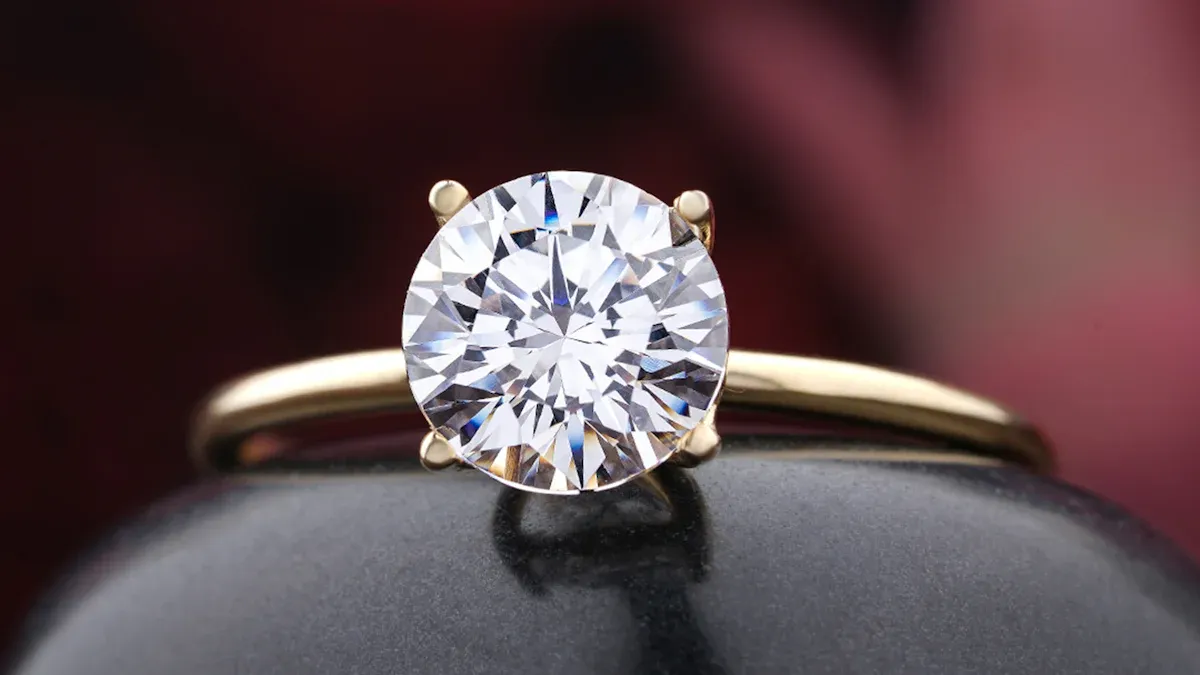
Moissanite is not diamond. It is silicon carbide, while diamond is carbon. The two materials can look similar in jewelry, but they have different optical properties. Start with that distinction, then compare the stone, metal, settings and price of the complete piece you want to buy.
Key Takeaways
- Moissanite and diamond are different materials. A lab-grown diamond is still diamond; lab-created moissanite is moissanite.
- Cut, dimensions, settings and lighting affect the appearance of both stones.
- A thermal diamond-tester reading alone does not prove that a stone is diamond.
- Check the disclosed material and the scope of any supplied report before purchase.
Is Moissanite a Real Diamond?
A diamond-like appearance does not establish diamond identity. A clear product description should state whether the stones are moissanite, lab-grown diamond, natural diamond or another material.
Moissanite vs Diamond: Chemical Makeup
When you look at moissanite and diamond, you see they are made from different things. Diamonds are made from pure carbon. Moissanite is made from silicon carbide. So, they are two different minerals. You can see this in the table below:
|
Gemstone |
Elemental Composition |
|---|---|
|
Diamond |
Pure Carbon |
|
Moissanite |
Silicon Carbide |
Diamond is rated 10 on the Mohs hardness scale and moissanite is commonly listed at 9.25. Hardness measures scratch resistance, not resistance to every type of impact or damage.
Moissanite can show pronounced rainbow fire. Diamond and moissanite can both return white light and colored flashes, depending on cut and lighting. Their grading descriptions are not interchangeable.
Moissanite can cost less than a comparable diamond piece. Compare equivalent metal, dimensions, stone sizes and construction rather than assuming a fixed saving.
Key Physical Differences
- Composition: diamond is carbon; moissanite is silicon carbide.
- Appearance: compare the actual cut and stones under similar lighting.
- Hardness: both resist scratching, but either stone and its setting can be damaged.
- Price: use current prices for equivalent configurations.
So, is moissanite a real diamond? No. They are different in chemistry, hardness, and price.
Why the Term "Moissanite Diamond" Is Misleading
The phrase “moissanite diamond” can confuse buyers because it suggests a type of diamond. Moissanite is a separate gemstone. It can be used as a diamond simulant when a piece is intended to resemble diamond, but that does not make it diamond or cubic zirconia.
Some people think moissanite diamonds are the same as real diamonds. This is not true. The name "moissanite diamond" can confuse buyers. Some sellers use it to make moissanite sound better. You should know moissanite is not a diamond. It is a different gemstone with its own good points.
If a product includes a GRA or other report, ask who issued it, which material it identifies and which stones it covers. Check the details against the product. A report for moissanite does not certify the stone as diamond.
Common Misconceptions
- Jewelry moissanite is generally lab-created.
- Moissanite, cubic zirconia and lab-grown diamond are different materials.
- A hardness number or report label does not guarantee the quality of a complete piece.
- Check the selected product’s specifications rather than generalizing from a material name.
You can choose moissanite for its appearance and the specifications of the piece. Describe it accurately as moissanite so the material is clear.
What Is Moissanite?
Origin and Discovery
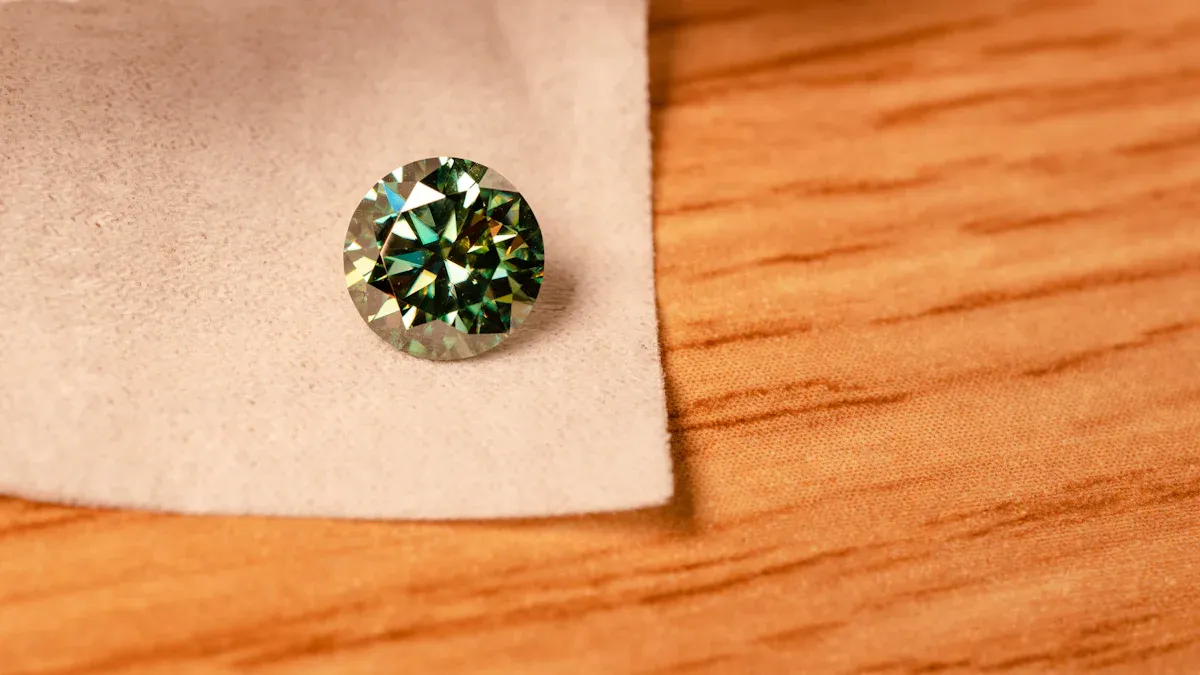
Natural moissanite is rare. The material used in jewelry is generally grown in laboratories. A lab-created stone should be disclosed as such; it should not be described as a gemstone taken from a meteorite.
Lab-Created Moissanite
Laboratory production makes moissanite available for jewelry in a range of shapes and sizes. The resulting stone is silicon carbide. Check its cut, dimensions and disclosed characteristics rather than assuming that every lab-grown stone has the same quality.
Lab creation describes the production route. It does not, on its own, establish a product’s environmental footprint or labor conditions.
Natural vs Lab Moissanite
Natural and lab-created moissanite are both silicon carbide. In jewelry, lab-created moissanite is the usual commercial choice. Ask the seller what is being supplied if the origin is unclear.
What Is a Diamond?
Diamonds are some of the most valuable gemstones you can find. You see them in rings, necklaces, and even watches. People love diamonds for their sparkle and strength. You might wonder what makes a diamond so special. Let’s look at how natural diamonds and lab-grown diamonds are made.
Natural Diamonds
Natural diamonds form deep inside the Earth. You cannot make these stones in a factory. They need special conditions to grow. Here is what happens:
- Natural diamond forms underground under high pressure and temperature.
- Its material is carbon arranged in a diamond crystal structure.
- The origin and characteristics of a particular stone should be documented separately.
Diamond’s hardness does not prevent every chip, impact or setting failure. Care for the complete piece according to its instructions.
Lab-Grown Diamonds
Lab-grown diamonds are diamonds produced in a laboratory. They have the diamond crystal structure and carbon composition. Their laboratory origin is different from that of mined diamonds and should be disclosed.
Lab-grown diamonds are made in two main ways:
-
High-Pressure High-Temperature (HPHT): Scientists use machines to squeeze and heat carbon until it turns into a diamond.
-
Chemical Vapor Deposition (CVD): A special gas with carbon is heated in a lab. The carbon sticks to a small diamond seed and grows into a bigger diamond.
Lab-grown diamond and moissanite are different choices. A lab-grown diamond is synthetic diamond; cubic zirconia and moissanite are separate materials that may be used for a similar visual effect.
Compare natural and lab-grown diamonds using the details and current price of the stones you are considering. A lower price or laboratory origin does not establish a universal environmental benefit.
Diamonds vs Moissanite: Key Differences
Appearance: Brilliance and Fire
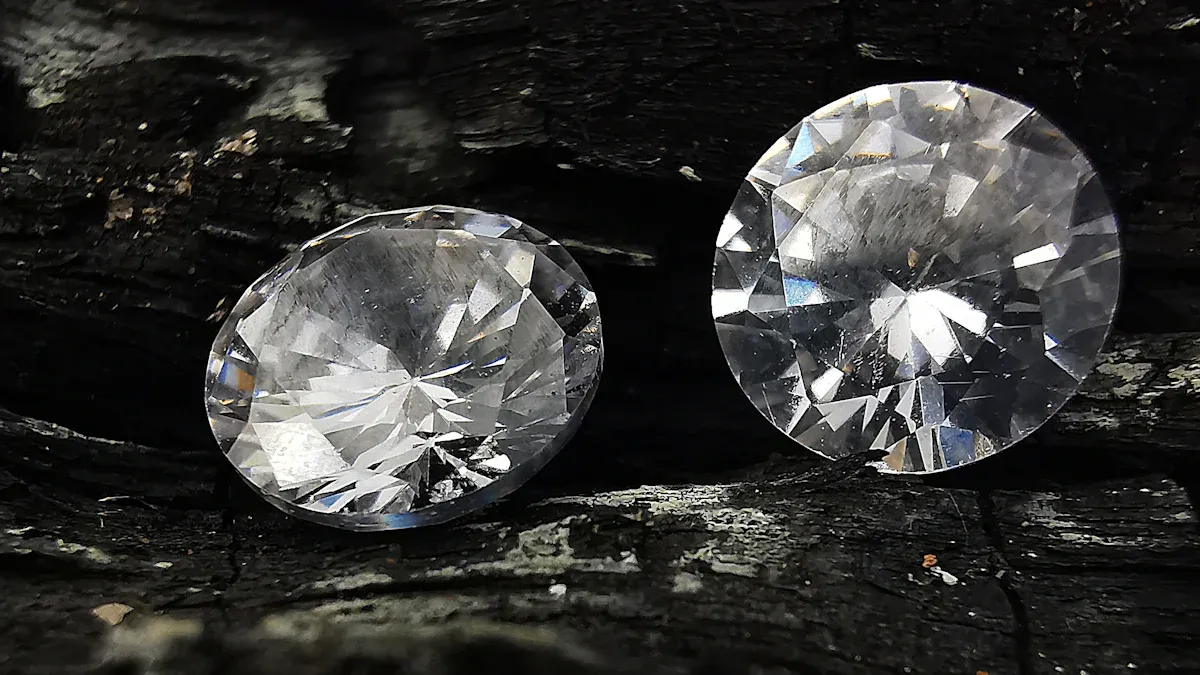
When you look at diamonds and moissanite, you see sparkle first. Both stones shine, but they do it in their own way. If you want a ring that grabs attention, you should think about brilliance and fire.
- Moissanite has different optical properties from diamond and can show pronounced rainbow fire.
- Cut, stone size, arrangement and light source influence the appearance of a piece.
- Both materials can collect oils and dirt. Follow the care instructions for the metal and settings.
If you put moissanite and diamond next to each other, moissanite sparkles with more rainbow colors. Diamond shines with a classic white light. Some people like the bold look of moissanite fire. Others like the soft, elegant glow of diamond. You get to pick the style you like best.
Compare stones in similar lighting. A studio photo or a bright spotlight can create a different impression from ordinary daylight.
Color and Clarity
Color and clarity help decide how much a gemstone is worth. You want your stone to look clear and bright. Let’s see how moissanite and diamond compare.
| Buying detail | What to confirm |
|---|---|
| Color | The actual stone’s disclosed characteristics and representative images |
| Clarity | What the description or report measures, and which stones it covers |
| Cut | Shape, proportions and appearance of the chosen stones |
Color and inclusions can vary between stones of either material. Laboratory production does not make every stone flawless. Inspect representative images and ask about any supplied report.
You cannot use the diamond color chart for moissanite. The grading is not the same. If you look at moissanite and diamond together, you may see more color in moissanite. Some people like this warm look. Others want the icy white of diamond.
Durability and Hardness
You want your ring to last a long time. Durability is important for everyday wear. Let’s see how moissanite and diamond compare in strength.
| Gemstone | Mohs hardness | What that means |
|---|---|---|
| Moissanite | Commonly listed at 9.25 | High scratch resistance; impact can still cause damage |
| Diamond | 10 | Highest Mohs rating; it can still chip |
Both stones have high scratch resistance. Daily-wear suitability also depends on the metal, settings and your activities. Remove jewelry before heavy contact and follow its care instructions.
A stone can chip or break, and a setting can loosen, even when the material is hard. Check for movement or damage before cleaning or wearing the piece again.
Decide which appearance you prefer, then evaluate the actual piece. The stone name alone does not establish a better value, a lower environmental footprint or a longer service life.
Price Comparison
Compare current prices for equivalent configurations. Metal, stone sizes, cut, settings and workmanship all affect the final price.
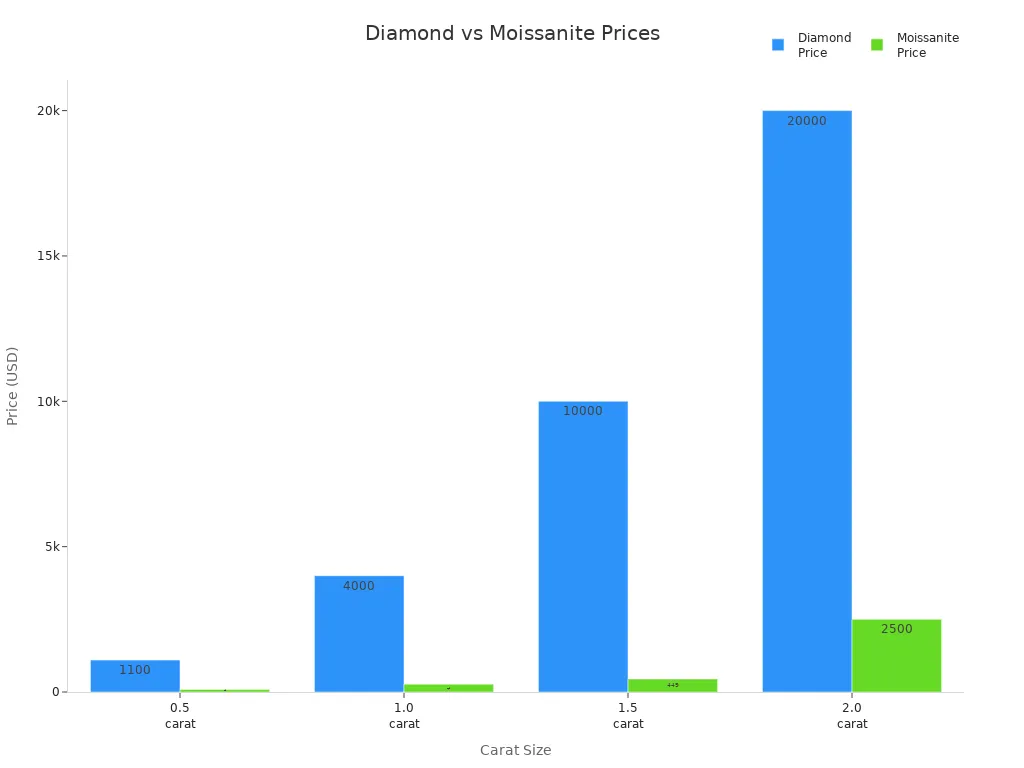
If a moissanite piece fits your budget better, use the saving as one part of the decision. Confirm that its dimensions, base metal and finish also suit what you want to wear.
Ethical Sourcing
Ask for evidence about the specific stone producer and metal supply chain when sourcing matters to you. A mined or lab-created label alone cannot establish the labor conditions or environmental impact of a finished piece.
Lab-created diamond and moissanite use energy and other resources in production. Comparisons need consistent data about the actual products and producers.
How to Tell the Difference Between Moissanite vs Diamond
Visual clues may suggest a material, but they do not replace identification. A qualified gemologist can choose appropriate tests for a loose or mounted stone.
Visual Clues
You can use your eyes to find some main differences. Here are the clues you should look for:
- Some moissanite can show doubled facet reflections under magnification.
- Light response can vary with the viewing angle, cut and size.
- A visual clue or strong rainbow sparkle is insufficient on its own to identify a stone.
If material identity matters to the purchase, request appropriate documentation or professional testing instead of judging from sparkle alone.
Professional Testing
You can go to a jeweler or gem expert for help. They use special tools and skills to tell moissanite from diamond. Here is what they do:
-
They use microscopes to check for doubled lines and double refraction.
-
They use advanced devices like spectroscopes for exact results.
-
They test thermal and electrical conductivity. Moissanite and diamond react in different ways.
-
They do not use only basic diamond testers, because those can make mistakes.
Ask what tests were used and whether the result identifies the material or provides a grading assessment. Those are different questions.
At-Home Checks
At-home checks can help you note differences in appearance. They cannot reliably establish identity in every stone.
- Check the disclosed material and any report provided with the product.
- Compare representative images under similar lighting.
- Read the scope and limitations of any tester you use.
- Ask a qualified gemologist to assess uncertain or conflicting results.
Remember: At-home checks give you hints, but they do not replace a professional test.
Pros and Cons of Moissanite
Advantages of Moissanite
You want a gemstone that shines and looks nice. Moissanite gives you these things and more. Many people and experts like moissanite for its special features. Look at the table to see how moissanite stands out:
| Potential benefit | Important condition |
|---|---|
| Price | Compare equivalent configurations at current prices |
| Appearance | Choose the actual cut, size and light response you prefer |
| Scratch resistance | Protect settings, finish and clasps as well as the stone |
| Availability | Confirm the selected product’s actual options |
Disadvantages of Moissanite
Repairs should be handled by a jeweler who knows the stone, finish and setting. Avoid assuming that a heating or polishing method suitable for one piece is safe for another.
A hard impact can damage a gemstone or its setting. Remove rings and other jewelry before contact sports or heavy tasks.
For an unusual design, ask which shapes and dimensions can be supplied. Availability depends on the actual stones and the proposed setting.
Quality can be different between moissanite stones. If you buy from a seller you do not know, you might get a stone with flaws. Always pick a trusted seller to make sure your moissanite looks good and lasts.
Oils and dirt can build up on moissanite or diamond. Clean according to the instructions for the whole piece, including its metal and finish.
Pros and Cons of Diamonds
Advantages of Diamonds
Diamonds are very popular in jewelry. You see them in rings, necklaces, and earrings. People pick diamonds for many reasons. Diamonds stand for love and strength. They also show tradition.
Some buyers choose diamond for its material, appearance or personal meaning. Future resale proceeds depend on the stone, piece, condition, buyer and market. A jewelry purchase does not guarantee a financial return.
Request documentation for specific sourcing claims. A grading report is not the same as evidence about labor practices or the entire metal supply chain.
Natural and lab-grown diamond should be disclosed separately. A qualified laboratory can use appropriate equipment to determine origin.
Some buyers prefer the appearance or personal meaning of diamond. That preference is separate from the stone’s identity, origin and grading details.
Key Benefits of Diamonds:
- Diamond material and its optical properties
- Personal meaning or preference
- Availability of grading information for particular stones
Disadvantages of Diamonds
Diamonds have some downsides you should know. You want to make a smart choice for your money and values.
If sourcing matters to you, ask how the stone and metal are documented. Evaluate the actual evidence rather than treating a material as uniformly ethical or unethical.
Environmental comparisons need information about production methods, energy, metal sourcing and the finished piece. Ask for evidence behind a sustainability claim.
Tip: Always ask for certificates and details about your diamond’s origin. This helps you buy smart and ethically.
Prices vary across stones and complete pieces. Compare equivalent configurations using current quotations rather than assuming that diamond always costs more than every other gemstone.
Summary of Diamond Drawbacks:
- Price of the complete piece
- Evidence for material, origin and any grading claim
- Care required by the stone, metal and settings
You should think about these pros and cons before you choose a diamond. This helps you pick the right stone for your values and budget.
Choosing Between Moissanite and Diamond
Factors to Consider
You want your jewelry to match your values and needs. When you choose between moissanite and diamond, you should look at more than just the sparkle. Think about what matters most to you.
- Compare the appearance you prefer under similar lighting.
- Set a budget for the complete piece.
- Check the actual metal, finish, stone sizes and settings.
- Review sourcing evidence and the applicable service terms.
Personal Preferences
Your style and feelings play a big role in your choice. Some people love the bold sparkle of moissanite engagement rings. Others want the timeless look of a diamond engagement ring.
- Choose the cut, shape and size that suit your style.
- Consider the meaning of the piece to you rather than a universal claim about tradition.
Tip: Try on both stones. See which one makes you smile. Your ring should feel special to you.
Budget and Lifestyle
Your budget and daily life matter when you pick a gemstone. You want a ring that fits your wallet and your routine.
| Factor | Buying question |
|---|---|
| Budget | Does the complete selected configuration fit your budget? |
| Sourcing | What evidence is available for this product? |
| Lifestyle | Do the metal, finish and settings suit the way you will wear it? |
Moissanite can be an attractive diamond alternative when you prefer its appearance and the piece’s specifications fit your needs.
Remember: Your ring should fit your life, your values, and your budget. Choose the gemstone that makes you proud every day.
Where to Buy Moissanite and Diamonds
Trusted Retailers
You want to feel safe when you buy moissanite or diamond jewelry. Trusted stores help you avoid scams and get good deals. You should pick shops that follow important rules. The table below shows what experts say to look for:
|
Criteria |
Description |
|---|---|
|
Seller Verification |
Check if the store is part of trade groups and has a real address. |
|
Certification Authenticity |
Make sure the certificate is real and matches the stone’s laser mark. |
|
Ethical Practices |
Pick stores that follow fair rules and care about customers. |
|
Customer Testimonials |
Read reviews to see what other buyers think. |
|
Return Policies |
Find clear return rules and guarantees to protect your money. |
|
Transaction Security Measures |
Make sure the store uses safe ways to pay for your jewelry. |
Check the seller’s contact details, product descriptions, reviews and applicable policies. If membership or certification is claimed, verify what it covers. A logo alone is not a product-quality guarantee.
Sommarnox offers jewelry with product-specific materials and options. Check the selected page and ask about any unclear stone, base-metal or finish description.
Online Shopping Tips
Shopping online for moissanite or diamond jewelry gives you lots of choices. You need to be careful and make smart picks. Follow these tips to shop safely:
- Set your budget and choose the style and dimensions you want.
- Confirm the stone identity, base metal and any plating.
- Ask what any supplied report covers and how it matches the product.
- Read reviews and the applicable return, warranty and shipping terms.
- For a ring, confirm the size system and any resizing conditions.
Tip: Always check the store and read reviews before you buy. This helps you avoid problems and get the best jewelry for you.
You can shop with confidence if you follow these steps. You will get a pretty moissanite or diamond ring that fits your style and budget.
Moissanite is silicon carbide; diamond is carbon and may be natural or lab-grown. Both can be used in jewelry, but they should be described as different materials.
| Feature | Moissanite | Diamond |
|---|---|---|
| Composition | Silicon carbide | Carbon |
| Hardness | Commonly listed at 9.25 Mohs | 10 Mohs |
| Appearance | Can show pronounced rainbow fire | Depends on cut, size and lighting |
| Evidence | Confirm identity and report scope | Confirm identity, origin and report scope |
Moissanite is not a real diamond. Pick the stone that matches your style and budget. Think about what matters to you. Choose the one that makes you happy.
FAQ
Is moissanite a fake diamond?
No, moissanite is not a fake diamond. You get a real gemstone with its own beauty and strength. Moissanite stands out for its sparkle and value. You can wear it with pride.
Can you tell moissanite from diamond with your eyes?
You may notice extra rainbow flashes in moissanite. Diamonds show a classic white sparkle. If you want to be sure, ask a jeweler for help. They use special tools to check.
Does moissanite last as long as a diamond?
Moissanite is highly scratch-resistant, but the lifespan of jewelry also depends on the metal, settings, finish and care. Either stone can be damaged by impact.
Will moissanite lose its sparkle over time?
Oils and dirt can affect sparkle. Follow the care instructions, and ask a jeweler to check persistent dullness or damaged settings.
Is moissanite good for engagement rings?
It can suit an engagement ring if you prefer its appearance and the design fits your needs. Confirm the stone, metal, dimensions and care rather than assuming a benefit from the material name alone.
Can you resell moissanite jewelry?
A resale price depends on the piece, its condition, the buyer and the market. Neither moissanite nor diamond jewelry guarantees recovery of the original price.
Is moissanite eco-friendly?
Lab creation alone does not prove a smaller environmental footprint or ethical labor practices. Ask for evidence relating to the producer and the complete product.
Related Guides
- Moissanite vs Lab-Grown Diamond Chains on Camera
- Moissanite vs Diamond Cuban Link Chains: Key Differences
Explore Jewelry Options
Use the selected product’s current specifications to confirm its stone, base metal, finish and dimensions.

