


You can estimate ring size at home with a non-stretch strip of paper or a ring you already wear comfortably on the same finger. Measure in millimeters, repeat the measurement and confirm the size system used by the exact product. A physical ring sizer or a jeweler can help check the result before an important order.
Key Takeaways
- Use a non-stretch strip or a suitable ring sizer as a starting point, then confirm the product’s size system.
-
Think about the time of day when you measure your finger. Your finger can change size in different seasons. This helps your ring feel comfortable.
- Check printed or digital sizing tools against a physical measurement.
- Repeat the measurement and consider the width of the ring you intend to buy.
- Ask the seller or a jeweler for help if the size system or fit is unclear.
How to Measure Ring Size at Home
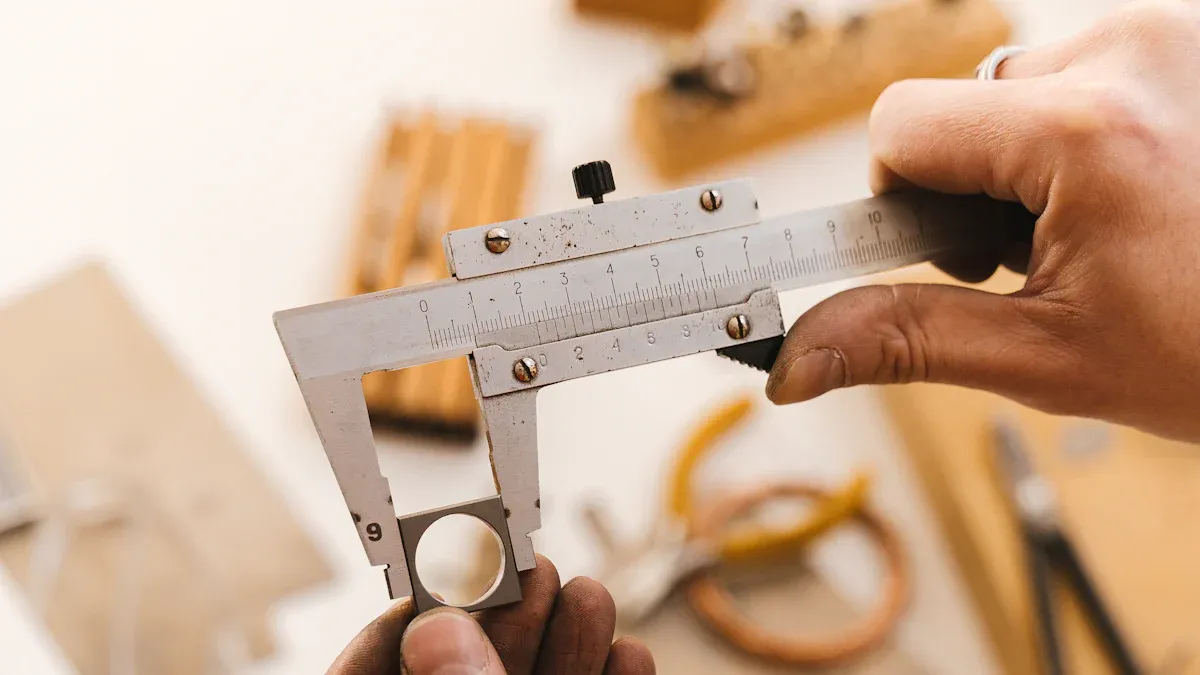
Using String, Paper, and Measuring Tape
Use a non-stretch paper strip or measuring tape to estimate the circumference of the finger you intend to wear the ring on. Treat this as an initial measurement rather than a guarantee of fit.
-
Wrap a measuring tape around the base of your finger. Make sure it feels snug but not tight.
- If you use paper, wrap a narrow non-stretch strip around your finger and mark where the ends meet.
-
Lay the string or paper flat and measure the length with a ruler.
-
Write down the measurement in millimeters.
- Confirm the sizing system used by the specific product before converting the measurement.
- Measure the exact finger and hand you intend to wear the ring on.
Tip: Measure more than once when your hands are at a normal temperature and not unusually swollen.
Digital Sizing Tools and Apps
You can also measure ring size using digital tools and apps. Many jewelry websites offer online sizing guides. These tools give quick results, but you should know a few things:
- Check whether the tool uses a camera, a printed scale or an on-screen circle.
- Camera angle, print scaling and screen calibration can change the result.
- Compare the result with a physical measurement or a ring sizer.
- For an important purchase, ask a jeweler to check the fit with a sizer similar to the intended band width.
Note: Digital tools work best as a first step. Always double-check with a physical measurement before you order jewelry.
Ring Size Chart and Diameter Calculation
A ring size chart helps you convert your measurement into the correct size. You can print a chart or use one online. To use a chart:
-
Find your measurement in millimeters.
-
Match it to the size listed on the chart.
- Use the chart for the specific product’s size system rather than inferring it from the country of the website.
If you measure a ring you already own, use one that fits the same finger and hand. Measure the inside diameter across the center, excluding the metal of the band. A circumference measurement and a diameter measurement are different values.
| Measurement | How to record it |
|---|---|
| Finger circumference | Length around the finger, in millimeters |
| Inside ring diameter | Distance across the inside of a fitted ring, in millimeters |
| Product size | Confirm the seller’s system and conversion chart |
| Print scale | Print at actual size and check the chart’s calibration marker |
Repeat the measurement. If the two methods disagree or you are between sizes, ask for help instead of guessing.
Use the same measurement process for different ring styles, then check how the actual band width and setting affect the fit.
Ring Settings and Fit
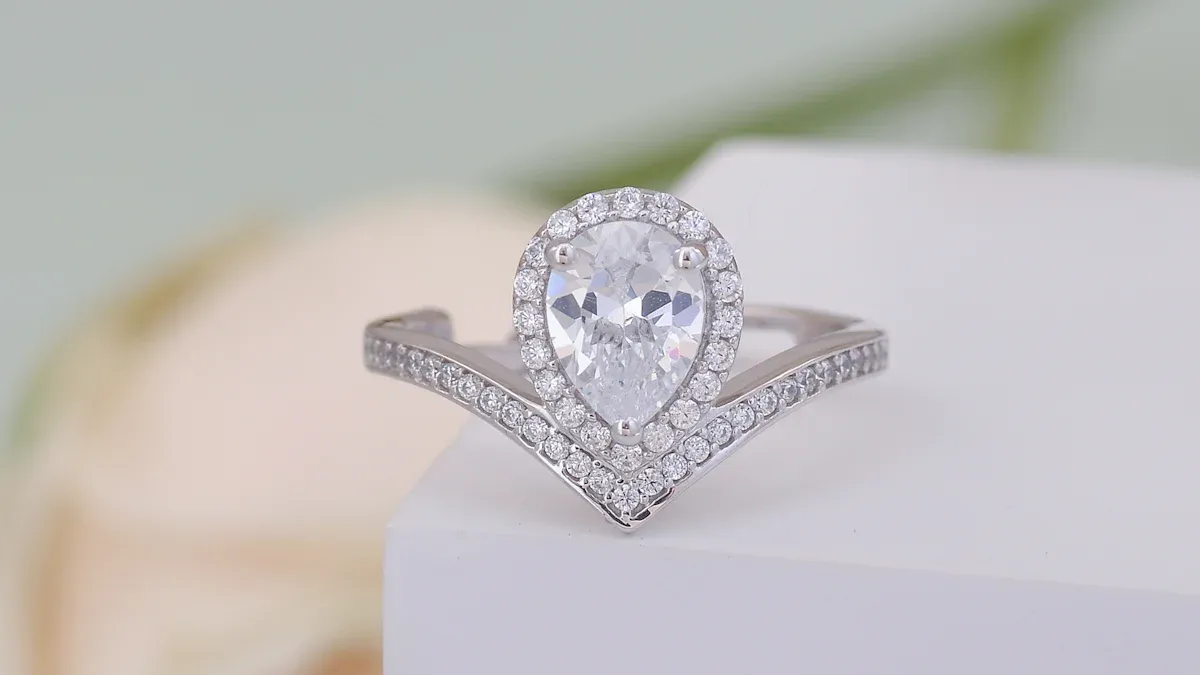
Fit and Setting Considerations
The stone shape does not determine your ring size. Check the band width, setting height and weight of the completed design. A raised or heavy setting may feel different from a plain band with the same size label.
Tip: Try a ring with a similar band width and setting profile if you can.
Finger Shape and Comfort
Measure the intended finger and check the band width. A narrow band and a wide band can feel different at the same nominal size. Choose the stone shape for its appearance separately from the fit of the band.
Avoiding Sizing Mistakes
Keep these sizing checks separate from stone-quality decisions:
- Measure the inside diameter or finger circumference with the units clearly recorded.
- Check that the ring can pass over the knuckle without feeling loose at the base.
- Compare a sizer with a similar band width and inner profile.
- Ask whether the intended construction can be resized.
- Confirm the product’s sizing system before ordering.
Stone shape, color and cut are separate choices. Use the band and setting to assess fit rather than treating gemstone proportions as a sizing rule.
Stone-Set and Custom Rings: Measure the Complete Design
Metal Types and Band Width
Base metal, finish and setting are separate product details. Band width and inner profile affect the fit more directly than the name of the stone. Compare a sizer or existing ring with a similar width to the design you want.
- Confirm the base metal and any plating or finish.
-
Band width affects both comfort and the look of your ring.
- Check the inner profile and setting height as well as the band width.
Customization and Comfort
For a custom ring, give the team your intended finger, hand and measured size. Confirm the sizing system and band width in the design brief, then check the approved CAD dimensions before production.
-
Share your inspiration with a designer.
-
Review sketches and digital previews.
- Confirm the material, dimensions and sizing system for the design.
-
Approve the design and let the experts craft your jewelry.
The design review is a chance to resolve unclear dimensions. It does not replace checking the fit with a physical sizer.
Confirming a Sommarnox Ring Order
Before ordering a Sommarnox ring, confirm the available size, the system used by that listing, the band width and the stated metal and stone type. Ask what supporting report applies to the exact design. A generic GRA label should not be treated as proof that a stone is a lab-grown diamond.
Tip: If a ring listing gives numbers without identifying the size system, ask the team before choosing a variant.
Signet Ring Sizing Tips
Knuckle Fit and Finger Choice
When you choose a signet ring, you need to think about both the base of your finger and your knuckle. Many people wear signet rings on the pinky, but you can pick any finger that feels comfortable. You should measure the base of your finger where the ring will sit. Next, measure the widest part of your knuckle. This helps you find a size that slides over your knuckle but does not feel loose. The ideal ring size should fit snugly. You want the ring to require a little effort to remove, so it does not fall off easily. Use these ring sizing tips to make sure your signet ring fits well.
-
Measure around your knuckle for the widest point.
-
Pick a size that feels secure but comfortable.
Tip: Try measuring your finger at different times of the day. Your finger size can change with temperature or activity.
Engraving and Head Size
A signet ring can have a larger or heavier head than a plain band. Compare how it balances on the finger and whether it turns during wear. Head size does not establish the ring size you need.
| Signet detail | Fit question |
|---|---|
| Head size and weight | Does it balance on the intended finger? |
| Band width | Does a similar-width sizer feel comfortable? |
| Inner profile | How does it sit at the finger base? |
| Knuckle | Can it pass over the knuckle without becoming loose at the base? |
Traditional Sizing Methods
You can use traditional methods to measure your signet ring size. Many jewelers use metal ring sizers or plastic gauges. You can also use a printable ring size chart. Place an existing ring over the chart to match the diameter. If you do not have a ring, wrap a strip of paper around your finger and mark where it meets. Measure the length with a ruler. Use the chart to find your size. These methods help you get an accurate fit for your signet ring, solitaire engagement ring, or any other jewelry.
Note: Double-check the size before ordering. Confirm whether the actual design can be resized rather than assuming that every ring can.
Common Mistakes When Measuring Ring Size
Timing and Seasonal Changes
You might think your finger size stays the same all year, but it changes with the seasons. Warm weather can make your fingers swell, while cold weather can cause them to shrink. If you measure your finger in winter, your ring may feel tight in summer. Lifestyle factors like exercise, diet, and stress also affect finger size. Even a small weight change can make a difference. To get the best fit, measure your finger when it feels normal—not too hot or cold. This helps you avoid problems with emerald or diamond rings that need a precise fit.
Tip: Measure your finger at different times of day and in different seasons. This gives you a better idea of your true size.
Band Style and Width Errors
Wide bands and stacked rings can feel different from a narrow band. Check with a sizer of a similar width. Stone-set or continuous-design bands may have resizing limits that depend on their construction.
| Ring style | Sizing check |
|---|---|
| Wide band | Try a sizer with similar width and inner profile. |
| Thin band | Check that it passes the knuckle and stays secure at the base. |
| Continuous stone setting | Ask about resizing limits for the exact construction. |
| Stacked rings | Assess the combined width on the intended finger. |
-
Do not use stretchy string or tape to measure. These materials can give you the wrong size.
-
Always account for your knuckle size, especially for signet rings.
Resizing Policies
If the ring does not fit, contact the seller before arranging alterations. Return eligibility depends on the current policy and whether the item is custom-made. A jeweler must assess the specific construction before confirming whether resizing is possible.
| Question | What to confirm |
|---|---|
| Return or exchange | The current policy for the exact item and reason |
| Resizing | Whether the ring’s construction allows alteration |
| Before work begins | How an alteration may affect the design, finish and service terms |
Note: Check the current policy and contact the team before making alterations.
Final Fit Checks
Seasonal and Lifestyle Factors
Measure when your hands feel normal and repeat the check if you get inconsistent results. Check the intended hand and finger, then compare a band with similar width and profile. Ask a professional for help if the ring needs to pass a large knuckle or if a raised setting turns during wear.
Tip: Avoid making a final size decision from one measurement taken when your hands are unusually cold, hot or swollen.
Checking Digital and Printed Tools
Digital and printed tools are useful only when their scale is correct. Follow the tool’s calibration instructions and compare the result with a physical measurement. Do not assume that a phone scan or printed circle guarantees an accurate size.
-
Digital tools are quick and easy to use.
- A physical sizer with similar band width can help check the fit.
- Confirm the product’s sizing system before converting the result.
Contacting the Sommarnox Team
Send the team the product you are considering, the finger and hand, your measurement in millimeters and any existing size that fits well. Ask them to confirm the listing’s size system and band dimensions before ordering.
Note: For the best fit, measure more than once. Ask a professional before you decide on your final size.
You can measure your ring size at home by following these steps:
- Prepare a non-stretch paper strip, a millimeter ruler and a pen.
-
Wrap it around your finger and mark the overlap.
-
Measure the length and use a chart to find your size.
- Ask about resizing limits before ordering rather than relying on resizing later.
Remember these tips before you buy jewelry:
-
Your finger size changes with the seasons and your daily activities.
- Check the exact product’s size system, band width and inner profile.
- Ask the Sommarnox team to confirm unclear size labels and dimensions before selecting a variant.
FAQ
How do you measure your ring size at home?
Wrap a non-stretch paper strip around the intended finger and mark the overlap. Measure the length in millimeters. Repeat the measurement, then use the conversion chart for the exact product’s size system.
What is the best time to measure ring size?
Measure when your hands feel normal and repeat at another time if the result varies. Avoid deciding from a measurement taken when your fingers are unusually cold or swollen.
Do wide bands affect ring size?
A wide band can feel tighter than a narrow band. Try a sizer of similar width and inner profile instead of applying a fixed half-size adjustment to every ring.
Can I use a digital app to measure ring size?
Use the app as an estimate and check its calibration instructions. Confirm the result with a physical measurement or a suitable ring sizer before ordering.
What should I do if my ring does not fit?
Contact the seller about the current terms, then ask a jeweler whether the exact design can be resized. Some constructions have limits, so check before any alteration.
Ask the team about the product’s size system · Read the current refund policy

