

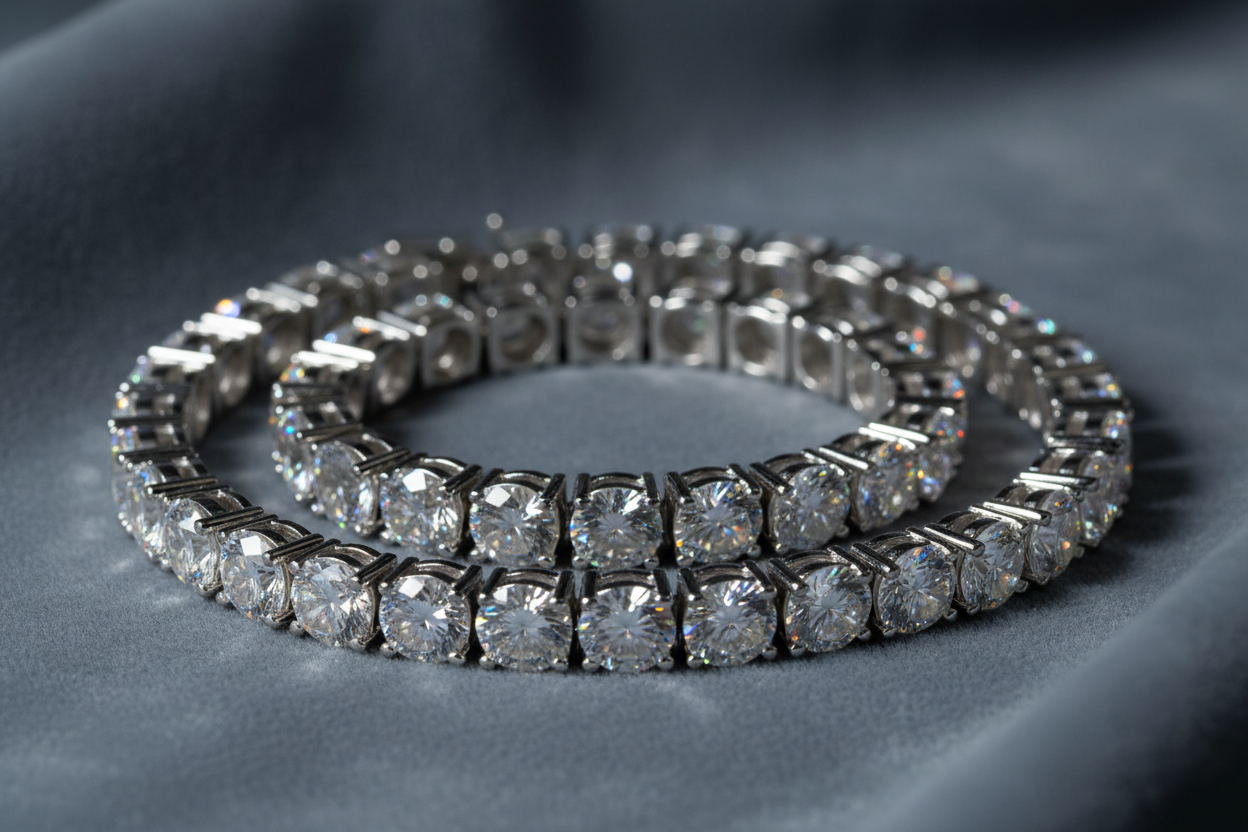
Choose a tennis chain by its stone-row design, stated materials, length and clasp. Compare the available variants and measure the drop you want before ordering. Gold plating and solid gold are different material descriptions.
Key Takeaways
- Check the base metal and stone type separately. White-gold tone and rose-gold tone describe appearance; read whether the metal is solid gold or plated.
- Compare lengths against your own neckline. The same 16 or 18-inch necklace sits differently on different people.
- Check the stone settings, flexibility and clasp. Confirm which supporting report, if any, is supplied for that exact item.
What Is a Tennis Necklace?
Design and Features
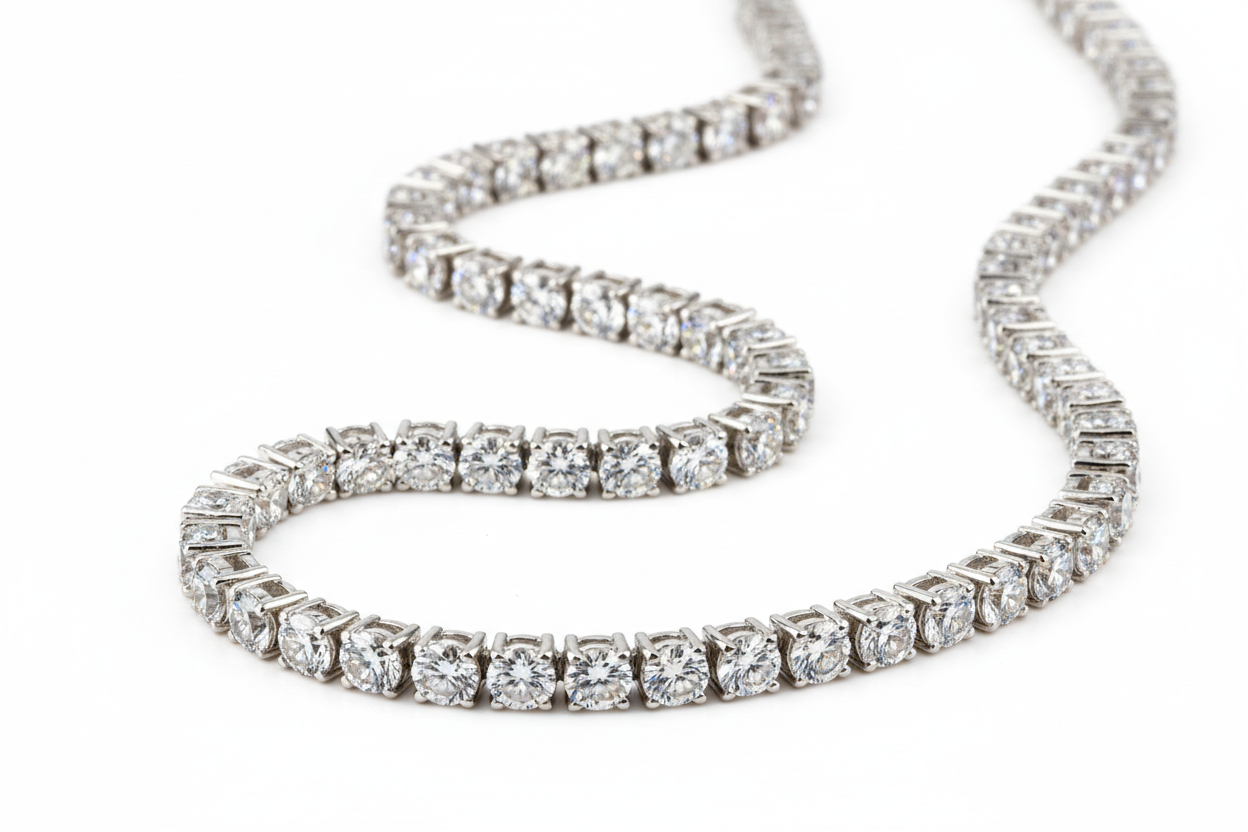
A tennis necklace is a flexible line of linked gemstone settings. Evenly sized stones create a uniform row; other designs graduate the sizes or use motifs.
- “Tennis chain” and “tennis necklace” are terms used for the necklace form of this stone-row design.
The necklace works for many events, casual or fancy.
You can pick gold or sterling silver to match your taste.
The name is often associated with a story about Chris Evert and a bracelet. The anecdote is about a bracelet, rather than a necklace, and this buying guide does not rely on a particular date.
Why It’s Popular
Many people like tennis necklaces for different reasons. The necklace works with many outfits. You can wear it with jeans and a T-shirt. It also looks good with sports clothes or a suit.
A tennis chain can be worn as a visible accent or as the main piece of neckwear. Choose the proportion and finish for the look you want.
Choosing Your Tennis Necklace
Types and Styles
Compare an even stone row, a graduated design or a motif-based chain. For layering, try different lengths and widths so each piece remains visible. These are design choices rather than a claim about current trends.
Pick a style that shows your personality.
Even stones give a neat look.
Prong settings make stones sparkle. Channel settings line up stones. Bezel settings keep stones safe.
Layering necklaces is a cool, modern idea.
Materials and Gemstones
Read the base metal, karat and finish separately. Solid gold, platinum, sterling silver and plated jewelry have different material descriptions and care needs.
Diamonds are the classic stone. They shine and have a long history. Moissanite is another good choice. It sparkles a lot and costs less than diamonds. Some necklaces use colored stones like turquoise or topaz for fun.
Compare these points when choosing stones:
| Detail | What to check |
|---|---|
| Stone type | Natural diamond, lab-grown diamond, moissanite or CZ must be described accurately. |
| Appearance | Compare the stone layout and photos under different lighting. |
| Metal and finish | Read the base metal, gold karat where applicable and any plating. |
| Supporting report | Check the issuer and what the report covers for the exact item. |
| Price | Compare current prices with dimensions and construction held as similar as possible. |
Lab creation describes the gemstone’s origin. Ask for evidence separately if a seller makes environmental or labor claims.
Fit and Length
Lengths such as 14, 16, 18, 20, 22 and 24 inches are examples to compare. The same measurement can sit at different points depending on your neck and build.
| Length | Comparison starting point |
|---|---|
| 14 inches | A short necklace length; check neck clearance. |
| 16 inches | Compare for a shorter drop. |
| 18 inches | Compare against a necklace you already like. |
| 20–22 inches | More length to test for layering or a lower drop. |
| 24 inches | Check how a longer layer sits with your clothing. |
Use a flexible tape or a chain you already like to test your preferred length. Check it with the neckline you plan to wear. Fit, setting structure and movement can all affect whether a tennis chain flips.
Quality and Certification
Quality is important when you buy a tennis necklace. Look for stones that are clear and all the same color. The metal should feel smooth and strong. Flexible necklaces bend to your neck and last longer. Stiff necklaces are not as comfy unless you wear them only sometimes.
A laboratory report describes the gemstone or item examined within its stated scope. Check the issuing laboratory and report number, and confirm whether it identifies a stone, grades individual stones or covers a finished piece. Moissanite is a separate gemstone from diamond; a moissanite document is not a diamond grading report.
- Confirm the exact stone description and any included supporting report.
Make sure the necklace bends and feels good.
- Read the current service, warranty and return terms before ordering.
Sommarnox Moissanite Tennis Chain Necklace
The standard Sommarnox moissanite tennis necklace lists D-color VVS moissanite, 925 sterling silver and 14K gold plating. Its white-tone, yellow-tone and rose-tone options describe the finish appearance.
Its listed widths are 2, 3, 4, 5 and 6.5 mm, with lengths of 16, 18, 20, 22 and 24 inches. Select the exact variant on the product page and follow the care instructions for the plating. A thermal diamond-tester response alone does not establish diamond identity or a stone’s quality.
For a custom design, confirm the requested details, materials and quote with the team. The ready-made listing should not be read as a promise that every engraving, birthstone or customization is included.
Use the product’s materials, dimensions and available options to decide whether it matches the necklace you want.
Tip: Keep your tennis necklace in its box or a soft pouch. This keeps it safe from scratches.
Care and Maintenance
Daily Cleaning
You can keep your necklace shiny with easy cleaning steps.
- Where the piece’s care instructions permit it, clean gently with lukewarm water and a small amount of mild soap.
Use a soft toothbrush to gently clean each stone and setting.
Rinse the necklace with clean water. Dry it with a soft, lint-free cloth.
Do not use strong chemicals. They can hurt the metal or stones.
Clean when needed and follow the instructions for the metal, finish and any treated stones. A plated necklace still needs care.
Storage Tips
Storing your necklace the right way keeps it safe from scratches and tangles.
- Close the clasp and store the necklace separately so it does not rub against other pieces.
Use a jewelry box with sections to keep pieces apart.
Put your necklace in a felt box or soft bag, especially when you travel.
- Wipe away surface oils with a soft cloth and make sure the necklace is dry before storing.
These habits help moissanite stones stay shiny and keep the metal looking new.
Professional Care
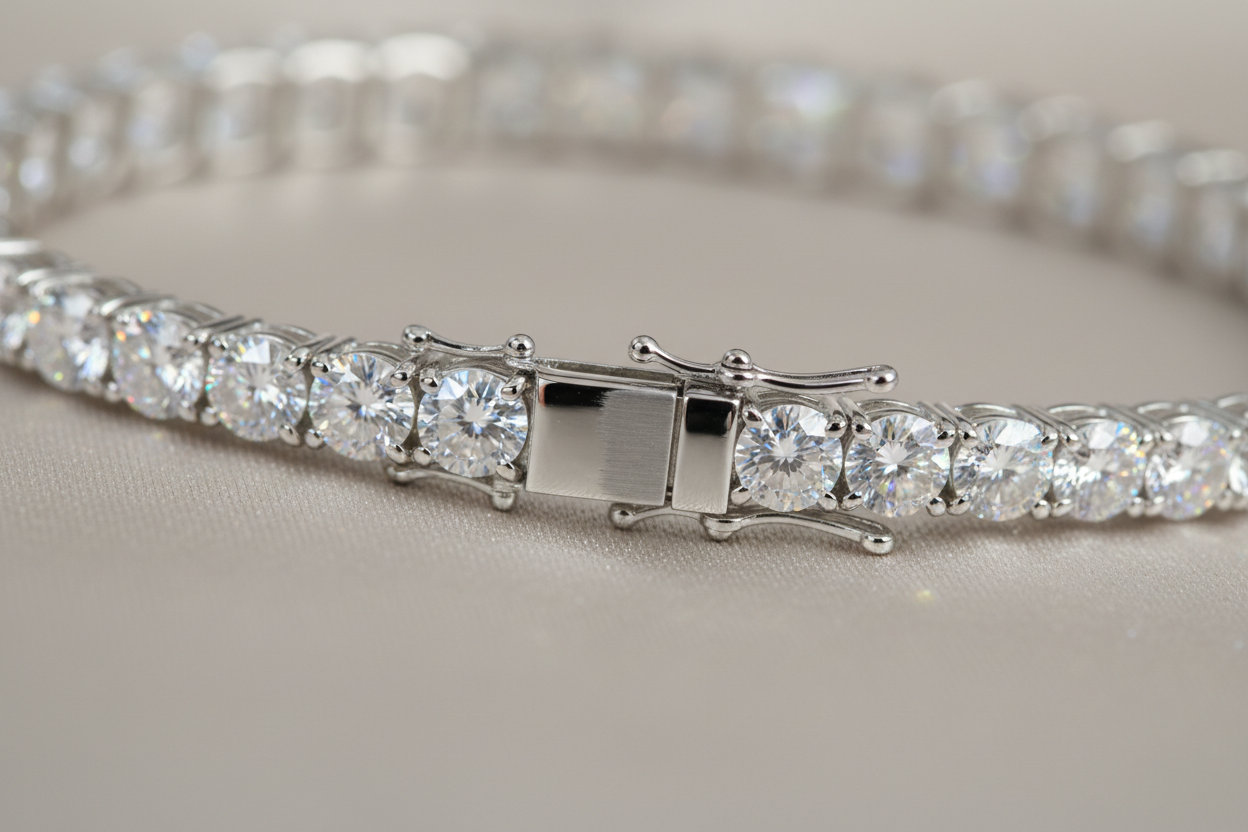
Ask a jeweler about loose stones, a clasp that does not close correctly or damaged settings. Confirm that any cleaning or refinishing method suits the piece.
| Service | Question to ask |
|---|---|
| Inspection | Are the prongs, links and clasp secure? |
| Cleaning | Does the method suit the stone, finish and plating? |
| Repair | Can this construction be repaired without damaging other parts? |
| Refinishing | Is replating appropriate for this specific metal and finish? |
Taking care of your necklace helps it look great for many years.
When you pick jewelry, think about how it looks and feels. Choose metals that are strong and stones that are clear. Find a design that fits what you like. Sommarnox has choices for all kinds of styles. The right jewelry can help you show who you are. Be proud when you pick your next piece.
FAQ
How do you know if a tennis necklace fits you?
Try the desired length with a flexible tape and compare it with a necklace you already like. Use the chain size guide as a reference, then check the actual product variants.
Can you wear a tennis necklace every day?
Daily wear depends on your activities and the piece’s settings, clasp and finish. Remove it before swimming, workouts and sleep, and follow its care instructions.
What makes moissanite a good choice for tennis necklaces?
Moissanite provides a distinct stone-set look. Compare its appearance and the complete necklace specifications with other options within your budget.
View the standard moissanite tennis necklace · Check the chain size guide

