

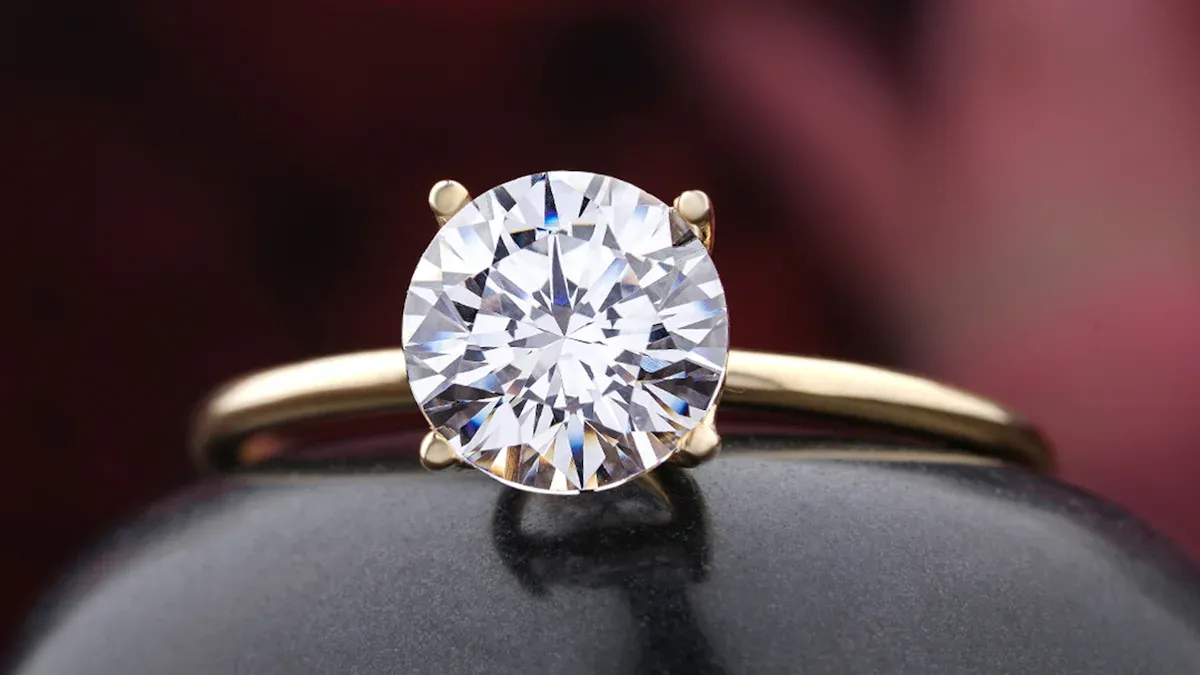
Is moissanite a real diamond? The answer is no. Many people mix up moissanite and diamonds. Both stones shine a lot in rings. You should know the difference before you buy one. This helps you make a smart choice. Today, more people pick moissanite. They like that it costs less and is made in an ethical way.
-
Moissanite sales went up by 40% last year.
-
Younger people want choices that are cheap and ethical. Moissanite sparkles even more than diamonds. It also stays strong for everyday use.
Key Takeaways
-
Moissanite is not a diamond. It is a special gemstone made from silicon carbide. Moissanite shines more than diamonds. It gives off extra sparkle and colorful flashes. Moissanite costs much less than diamonds. You can buy a bigger stone for less money. Moissanite is made in labs, so it is ethically sourced. It does not use harmful mining. Both moissanite and diamonds are strong. Diamonds are the hardest natural material on Earth. Moissanite may have a little color tint. Diamonds can be totally colorless. When you shop, pick trusted stores. Check for certifications to make sure of quality. Choosing moissanite helps the planet. It is a pretty and affordable choice instead of diamonds.
Is Moissanite a Real Diamond?
You might ask, is moissanite a real diamond? The answer is no. Moissanite and diamonds look alike, but they are not the same thing. Many people mix them up because both stones shine and sparkle. It is important to know the difference before you buy jewelry or a ring. This helps you make a smart choice and not make mistakes.
Moissanite vs Diamond: Chemical Makeup
When you look at moissanite and diamond, you see they are made from different things. Diamonds are made from pure carbon. Moissanite is made from silicon carbide. So, they are two different minerals. You can see this in the table below:
|
Gemstone |
Elemental Composition |
|---|---|
|
Diamond |
Pure Carbon |
|
Moissanite |
Silicon Carbide |
Diamonds are the hardest natural thing on Earth. They get a 10 on the Mohs scale. Moissanite is also hard, but it gets a 9.25. This means moissanite is strong, but not as tough as a diamond.
Moissanite shines even more than diamonds. It has a higher refractive index and more fire. This means moissanite sparkles with rainbow colors. Diamonds have a classic white shine. Moissanite usually has a little color. Diamonds can be clear or have a yellow tint. You cannot use the diamond color chart for moissanite.
Moissanite costs much less than diamonds. You can buy a big, pretty stone for less money. This makes moissanite a good choice if you want a nice ring and do not want to spend a lot.
Key Physical Differences
-
Brilliance: Moissanite sparkles more than diamonds.
-
Hardness: Diamonds are harder than moissanite.
-
Color: Diamonds can be clear; moissanite often has a little color.
-
Price: Moissanite is much cheaper.
So, is moissanite a real diamond? No. They are different in chemistry, hardness, and price.
Why the Term "Moissanite Diamond" Is Misleading
You might hear people say "moissanite diamond" in stores or online. This is not correct. It makes you think moissanite is a kind of diamond. But moissanite is its own gemstone. It is not a diamond simulant or a fake diamond. It is not cubic zirconia. It is not a lab-grown diamond. Moissanite has its own beauty and value.
Some people think moissanite diamonds are the same as real diamonds. This is not true. The name "moissanite diamond" can confuse buyers. Some sellers use it to make moissanite sound better. You should know moissanite is not a diamond. It is a different gemstone with its own good points.
Some companies give GRA certification for moissanite. This is not as strict as GIA or IGI, which are trusted diamond labs. You should not trust GRA certification when you buy moissanite. Many people think GRA means high quality, but that is not always true.
Common Misconceptions
-
Most moissanite is made in a lab, not found in nature.
-
Moissanite is not a fake diamond. It is a real gemstone made from silicon carbide.
-
Moissanite is not cubic zirconia. It is harder and lasts longer.
-
Moissanite is not a lab-grown diamond. It has a different chemical makeup.
-
Diamonds are harder than moissanite.
-
Moissanite rings are not cheap-looking. They look nice and last a long time.
-
Moissanite costs much less than diamonds.
-
Moissanite is strong and high quality.
So, is moissanite a real diamond? The answer is still no. Moissanite is a smart, ethical, and affordable choice. You get a pretty stone that is special. You do not need to call it a diamond simulant. You can enjoy moissanite for what it is—a unique and beautiful gemstone.
What Is Moissanite?
Origin and Discovery
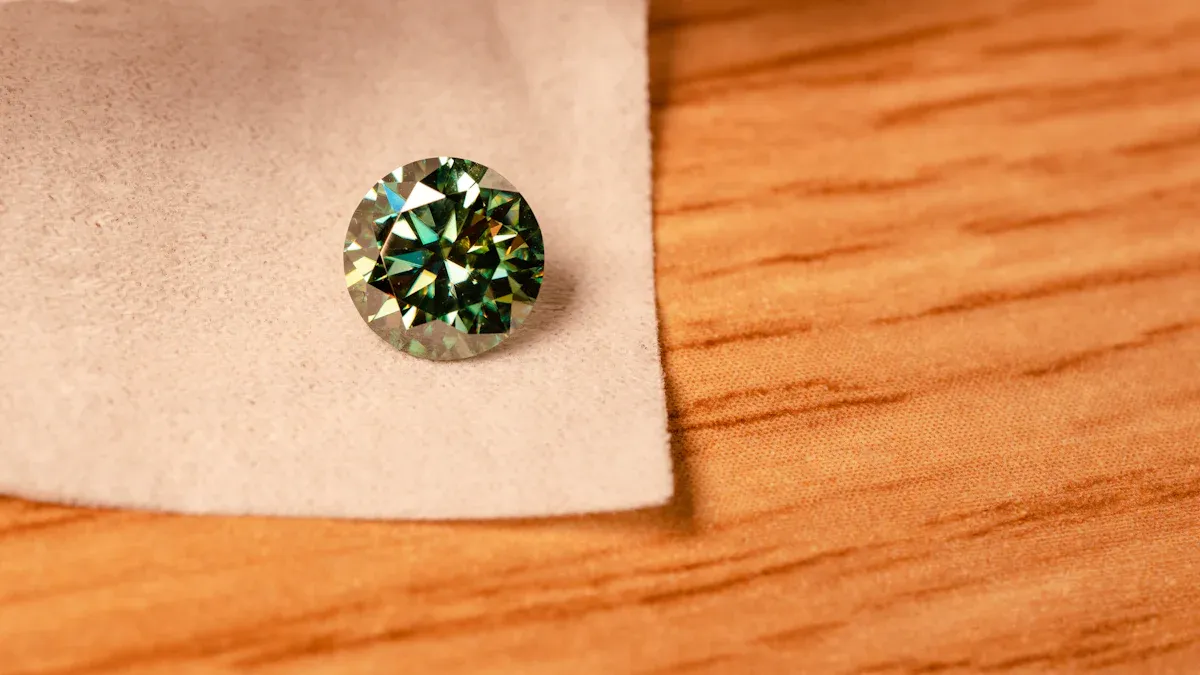
You might wonder what moissanite is. This gemstone has an interesting history. In 1893, a scientist named Henri Moissan found something cool in Arizona. He discovered tiny crystals at Meteor Crater. These crystals looked like diamonds. People first thought they were diamonds. Later, scientists learned they were not diamonds. They were a new mineral called silicon carbide. Today, we call this sparkling stone moissanite.
-
He made the discovery at Meteor Crater in Arizona.
-
People thought moissanite was diamond, but it is silicon carbide.
Moissanite’s special story makes it unique. You get a gemstone that comes from space!
Lab-Created Moissanite
Natural moissanite is very hard to find. There is not enough in nature for jewelry. That is why almost all moissanite in rings and earrings is made in labs. Scientists use special technology to grow moissanite crystals. These labs make stones that look great and last long.
Here are the main lab methods for making moissanite:
|
Process Type |
Description |
|---|---|
|
Chemical Vapor Deposition |
Gases with silicon and carbon react with heat to form crystals. |
|
Physical Vapor Transport |
Silicon carbide powder is heated, turns to vapor, then cools to make crystals. |
|
Flux Growth |
Molten flux melts silicon carbide, and crystals slowly grow as it cools. |
Lab-made moissanite shines bright and stays strong. You get a gemstone that is affordable and good for the planet. You do not need to worry about mining or hurting nature. Lab moissanite is a smart pick for your jewelry.
Natural vs Lab Moissanite
You may ask if natural and lab moissanite are different. Natural moissanite is super rare. You almost never see it in jewelry stores. Lab moissanite is what you find in rings and necklaces. Both types have the same chemical makeup—silicon carbide. Both sparkle and last a long time.
Here is why lab moissanite is the best choice:
-
Lab moissanite is easy to buy.
-
Lab stones cost much less than natural ones.
-
Lab moissanite is made in a controlled place, so quality is high.
-
Lab gemstones do not hurt the environment.
You can feel good picking lab moissanite. You get a beautiful, strong, and ethical gemstone. You save money and help the earth. If you want a stone that shines and lasts, lab moissanite is the answer.
What Is a Diamond?
Diamonds are some of the most valuable gemstones you can find. You see them in rings, necklaces, and even watches. People love diamonds for their sparkle and strength. You might wonder what makes a diamond so special. Let’s look at how natural diamonds and lab-grown diamonds are made.
Natural Diamonds
Natural diamonds form deep inside the Earth. You cannot make these stones in a factory. They need special conditions to grow. Here is what happens:
-
Natural diamonds form more than 100 miles beneath the Earth's surface.
-
The temperature must be over 1,000 degrees Celsius.
-
The pressure is millions of times greater than the air you breathe.
-
Carbon atoms line up in a crystal pattern under these extreme conditions.
-
Diamonds take billions of years to form.
Note: These tough conditions make diamonds the hardest natural material on Earth. That is why your diamond ring can last for generations.
You get a diamond that shines with amazing brilliance. The way carbon atoms fit together gives each diamond its famous sparkle. You cannot find this in any other gemstone. When you choose a natural diamond, you hold a piece of Earth’s history.
Lab-Grown Diamonds
You can also choose lab-grown diamonds. These stones are real diamonds, but scientists make them in a lab. They use advanced technology to copy the same heat and pressure found deep in the Earth. You do not have to wait billions of years. Lab-grown diamonds form in just a few weeks.
Lab-grown diamonds are made in two main ways:
-
High-Pressure High-Temperature (HPHT): Scientists use machines to squeeze and heat carbon until it turns into a diamond.
-
Chemical Vapor Deposition (CVD): A special gas with carbon is heated in a lab. The carbon sticks to a small diamond seed and grows into a bigger diamond.
You get the same sparkle, hardness, and beauty as a natural diamond. Lab-grown diamonds are not fake. They are not a synthetic diamond like cubic zirconia. You can call them real diamonds because they have the same chemical makeup.
Tip: Lab-grown diamonds cost less than natural diamonds. You can buy a bigger stone for your money. You also help the planet because lab diamonds do not need mining.
You see more people choosing lab-grown diamonds for their rings and jewelry. You get a beautiful diamond, save money, and make an ethical choice. If you want a diamond that shines and lasts, lab-grown diamonds are a smart option.
Diamonds vs Moissanite: Key Differences
Appearance: Brilliance and Fire
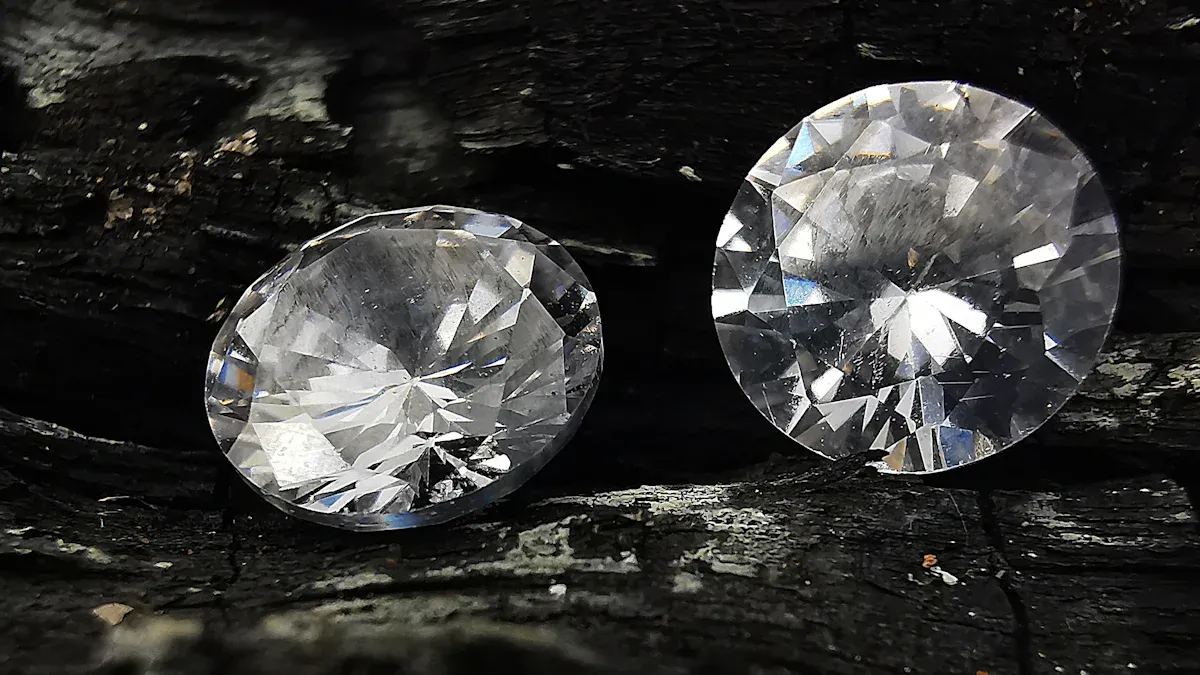
When you look at diamonds and moissanite, you see sparkle first. Both stones shine, but they do it in their own way. If you want a ring that grabs attention, you should think about brilliance and fire.
-
Moissanite has a refractive index between 2.65 and 2.69. This is about 10% higher than diamond, which is 2.42. Moissanite bends light more, so it sparkles extra bright.
-
Moissanite shows stronger rainbow flashes, called fire. Its dispersion is 0.104, while diamond is only 0.044. You see almost 2.5 times more color flashes in moissanite.
-
Moissanite stays clean longer. It does not get greasy as fast as diamond. Your stone keeps its shine with less cleaning.
If you put moissanite and diamond next to each other, moissanite sparkles with more rainbow colors. Diamond shines with a classic white light. Some people like the bold look of moissanite fire. Others like the soft, elegant glow of diamond. You get to pick the style you like best.
Tip: If you want a ring that shines in every light, moissanite gives you more fire and brilliance. If you want a classic look, diamond is the best choice.
Color and Clarity
Color and clarity help decide how much a gemstone is worth. You want your stone to look clear and bright. Let’s see how moissanite and diamond compare.
|
Feature |
Diamond Grading |
|
|---|---|---|
|
Color Grades |
Colorless (D–F), Near Colorless (G–H), Faint Tint (I–J and below) |
D–Z scale, with D being colorless and Z having noticeable color |
|
Clarity Grades |
VS (Very Slightly Included), VVS (Very Very Slightly Included), IF (Internally Flawless) |
Similar grading with inclusions affecting value |
Moissanite often has a little yellow or gray tint, especially in bigger stones. Diamonds can be totally colorless, but those cost more. Both stones can have tiny marks inside called inclusions. Lab moissanite usually has fewer marks because it is made in a lab. Lab diamonds also have high clarity, but natural diamonds may show more flaws.
You cannot use the diamond color chart for moissanite. The grading is not the same. If you look at moissanite and diamond together, you may see more color in moissanite. Some people like this warm look. Others want the icy white of diamond.
Note: If you want a flawless look, lab stones give you high clarity and good value. You get to choose what matters most to you.
Durability and Hardness
You want your ring to last a long time. Durability is important for everyday wear. Let’s see how moissanite and diamond compare in strength.
|
Gemstone |
Mohs Hardness |
Durability Characteristics |
|---|---|---|
|
Moissanite |
Highly durable, suitable for everyday wear, slightly prone to surface abrasions. |
|
|
Diamond |
10 |
The hardest natural substance, highly resistant to scratches. |
Diamond is the hardest natural thing on Earth. It gets a perfect 10 on the Mohs scale. Moissanite is also very hard, with a score of 9.25. You can wear both every day without worry. Moissanite may get tiny scratches over time, but it stays strong. Diamond resists scratches better.
Lab stones like moissanite and lab diamonds are very durable. You do not need to worry about breaking or chipping your ring. Both stones last for many years.
If you want a gemstone that can handle daily life, both moissanite and diamond are smart choices. You get lasting value and beauty.
Diamonds and moissanite have different strengths. Moissanite shines with bold fire and color. Diamond gives you classic beauty and the highest hardness. Both stones offer value, ethical choices, and sustainability. You get to pick what fits your style, your values, and your life.
Price Comparison
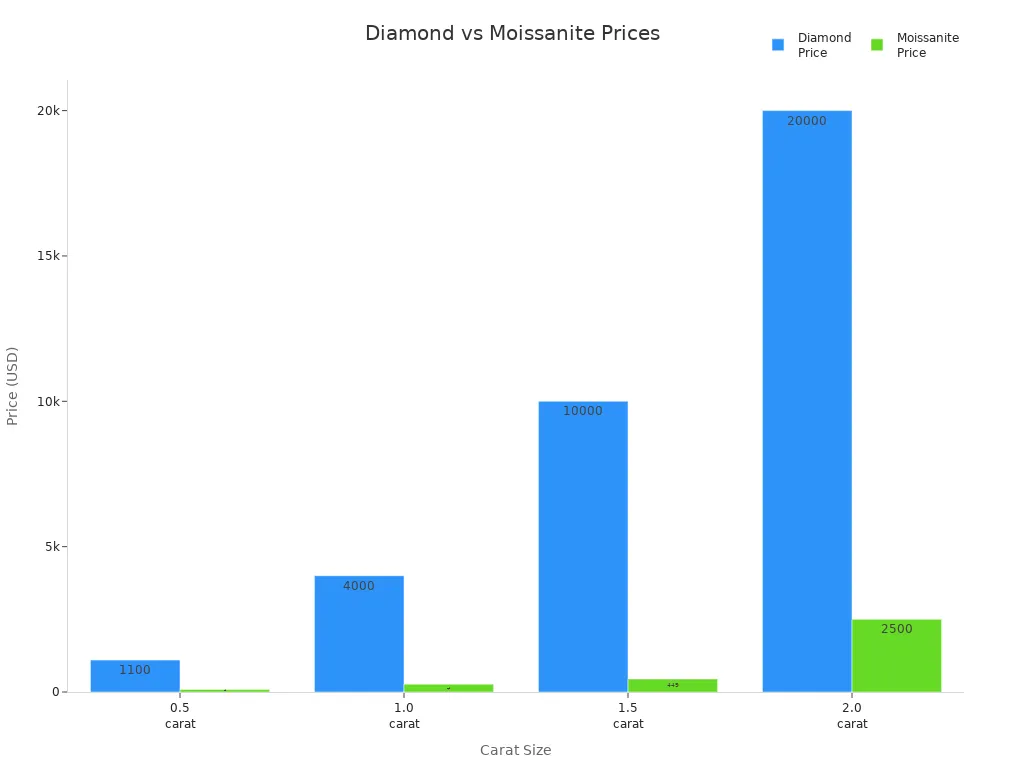
You want your money to go far. Diamonds and moissanite cost very different amounts. Moissanite gives you a big, shiny stone for much less money. You can save thousands and still get a pretty ring.
Check the table below. It shows what you pay for diamonds and moissanite that are the same size and quality:
|
Carat Size |
Diamond Price |
Moissanite Price |
|---|---|---|
|
0.5 |
$1,100+ |
$89 |
|
1.0 |
$4,000+ |
$269 |
|
1.5 |
$10,000+ |
$449 |
|
2.0 |
$20,000+ |
$2,500 |
A 1-carat diamond costs over $4,000. A 1-carat moissanite costs only $269. The price difference gets bigger with larger stones. A 2-carat diamond costs $20,000 or more. A 2-carat moissanite costs just $2,500.
You can use the money you save for a nicer ring setting, a bigger stone, or even a fun trip. Many people pick moissanite because it looks great and fits their budget. You do not have to give up style or quality. Moissanite shines and lasts just like lab-grown diamonds, but costs much less.
If you want a ring that gets noticed, moissanite lets you pick a bigger stone without spending too much. You get more sparkle and color for less money. Choosing between diamonds and moissanite is not just about looks. It is about spending wisely and getting the best deal.
Tip: Pick moissanite if you want a large, bright stone and want to save money. Choose diamond if you care about tradition and do not mind paying more.
Ethical Sourcing
You care about how your gemstones are made. It is important to think about ethics when picking diamonds or moissanite. Moissanite is the best choice if you want a stone that is good for people and the planet.
-
Moissanite is made in labs, so no mining hurts the earth.
-
Diamond mining can ruin forests, pollute water, and harm animals.
-
Moissanite is conflict-free and made with strict rules.
-
Some diamonds come from places with child labor and unsafe jobs.
-
Moissanite uses less energy and fewer resources than diamond mining.
-
Lab-grown moissanite does not cause the problems that come from digging for diamonds.
Lab-grown diamonds are also better for the planet than mined diamonds. You get the same beauty and strength without hurting nature. Lab stones do not support bad working conditions or conflict. You help protect the earth and support fair jobs.
If you want to help people and nature, pick moissanite or lab-grown diamonds. You get a beautiful stone and feel good about your choice. Ethical sourcing means you can trust your ring. You know your jewelry shines for good reasons.
Note: When you choose moissanite or lab-grown diamonds, you help make the world better for everyone.
How to Tell the Difference Between Moissanite vs Diamond
You want to know how to spot moissanite and diamond. This helps you make a smart choice. You will not get confused when you shop for jewelry. You can see the differences with your eyes. You can also get help from a professional. You can even try some tests at home.
Visual Clues
You can use your eyes to find some main differences. Here are the clues you should look for:
-
Moissanite sparkles more than diamond. You see extra rainbow flashes in moissanite.
-
Moissanite shows double refraction. If you look at the stone from the side, you may see doubled lines inside. Diamonds do not show this effect.
-
Reflections in moissanite look a bit blurry. Diamond reflections look sharp and clear.
-
If you use a jeweler’s loupe, you can see these clues better.
Tip: Hold the stone up to the light and turn it. If you see lots of colorful flashes and doubled lines, it is probably moissanite.
Professional Testing
You can go to a jeweler or gem expert for help. They use special tools and skills to tell moissanite from diamond. Here is what they do:
-
They use microscopes to check for doubled lines and double refraction.
-
They use advanced devices like spectroscopes for exact results.
-
They test thermal and electrical conductivity. Moissanite and diamond react in different ways.
-
They do not use only basic diamond testers, because those can make mistakes.
Note: Professional testing gives you the best answer. You will feel sure before you buy or sell a stone.
At-Home Checks
You can try some easy tests at home to check your stone. These methods are not perfect, but they help you find clues:
-
Look for sparkle and fire. Moissanite shines with more colorful flashes than diamond.
-
Use a magnifying glass or loupe. Moissanite shows doubled lines, but diamond does not.
-
Check the color. Moissanite may look a little yellow or green. Diamonds are graded on a color chart, but moissanite is not.
-
Look at the facet edges. Diamonds have sharper, cleaner lines. Moissanite may show tiny rough spots.
Remember: At-home checks give you hints, but they do not replace a professional test.
Knowing how to spot moissanite and diamond saves you money. It helps you pick the right stone. You get the look you want and the value you deserve.
Pros and Cons of Moissanite
Advantages of Moissanite
You want a gemstone that shines and looks nice. Moissanite gives you these things and more. Many people and experts like moissanite for its special features. Look at the table to see how moissanite stands out:
|
Advantage |
Description |
|---|---|
|
Affordability |
You pay much less than for a diamond. You can pick a bigger stone and save money. |
|
Appearance |
Moissanite looks almost like a diamond. Most people cannot see the difference. |
|
Extra Sparkle |
Moissanite reflects more light. You see more shine and rainbow colors than with a diamond. |
|
Eco-Friendly |
Lab-made stones do not hurt the planet. You avoid problems from diamond mining. |
|
Clarity |
Moissanite is usually flawless. It stays clean longer than other gems. |
Tip: If you want a ring that shines and stands out, moissanite gives you more sparkle for less money. You also help the earth with your choice.
Disadvantages of Moissanite
You should know the downsides before you pick moissanite. Some people notice moissanite can get damaged by heat. If a jeweler uses high heat to fix your ring, the stone might change color or get tiny cracks. Diamonds handle heat better.
Moissanite is hard, but not as tough as diamond. If you play sports or use your hands a lot, a hard hit can chip or crack moissanite, especially if it is big. You need to be careful during rough activities.
You may want a special ring design. Moissanite can be hard for jewelers to cut into unique shapes. This means you have fewer choices if you want something different.
Some people think moissanite is a "cheap" diamond. This idea can make your ring feel less special, especially for big events like engagements. You might care about what others think, even if you love your stone.
Quality can be different between moissanite stones. If you buy from a seller you do not know, you might get a stone with flaws. Always pick a trusted seller to make sure your moissanite looks good and lasts.
Moissanite can attract oils and dirt more than diamonds. You may need to clean your ring more often to keep it shiny. This can feel like extra work.
Note: You should think about these downsides and the good points. Many people still choose moissanite because it is pretty, a good value, and gives peace of mind.
Pros and Cons of Diamonds
Advantages of Diamonds
Diamonds are very popular in jewelry. You see them in rings, necklaces, and earrings. People pick diamonds for many reasons. Diamonds stand for love and strength. They also show tradition.
Diamonds keep their value for a long time. Many people think diamonds are a good investment. You can give a diamond to your kids or sell it later.
Natural diamonds go up in value by about 3% each year for the last 35 years. Lab-grown diamonds lose value quickly.
You feel safe when you buy diamonds from trusted sellers. The diamond industry has strict rules. These rules help make sure diamonds are conflict-free.
Natural diamonds follow rules like the Kimberley Process Certification Scheme. This makes sure they are conflict-free.
You can tell natural diamonds apart from lab-grown ones. This makes your diamond feel special and unique.
Natural diamonds are easy to spot compared to lab-grown diamonds. This can change what buyers pick.
Diamonds shine with a classic white light. Their sparkle never goes out of style. Many people feel proud to wear diamonds. Diamonds show your taste and mark big moments.
People care more about where their jewelry comes from.
By 2025, one-third of fine jewelry buys may be affected by ESG factors. This shows buyers are changing what matters to them.
Key Benefits of Diamonds:
-
Hold value for years
-
Classic look and sparkle
-
Symbol of love and tradition
-
Strict rules for ethical sourcing
-
Unique and easy to spot
Disadvantages of Diamonds
Diamonds have some downsides you should know. You want to make a smart choice for your money and values.
-
Making diamonds uses lots of energy
-
Need certificates for using renewable energy
-
Diamonds made with non-renewable energy may lose value when resold
You may worry about how diamonds are mined. Some places have bad working conditions. Problems like human rights abuses and child labor can happen.
-
Human rights abuses
-
Child labor
-
Diamonds can fund conflict
-
Poor supply chain transparency
-
Money laundering and corruption
-
Mining hurts the environment
It is hard to know where your diamond comes from. The supply chain is not always clear.
-
How energy is used affects lab-grown diamond value
Mining diamonds can hurt the earth. It uses lots of energy and can damage land and water. You should ask your jeweler how your diamond was sourced.
Tip: Always ask for certificates and details about your diamond’s origin. This helps you buy smart and ethically.
Diamonds cost more than other gemstones. You pay for tradition, rarity, and beauty. If you want a big stone or a special design, the price goes up fast.
Summary of Diamond Drawbacks:
-
High price
-
Hurts the environment
-
Supply chain issues
You should think about these pros and cons before you choose a diamond. This helps you pick the right stone for your values and budget.
Choosing Between Moissanite and Diamond
Factors to Consider
You want your jewelry to match your values and needs. When you choose between moissanite and diamond, you should look at more than just the sparkle. Think about what matters most to you.
-
Moissanite is an ethical choice. You avoid the problems of diamond mining, like hurting the earth or risking human rights.
-
Moissanite is a real gemstone. It is not a fake diamond. It has its own beauty and strength.
-
Moissanite engagement rings offer durability and a unique shine. You get a stone that stands out.
-
Moissanite gives you affordability. You can buy a larger stone for less money.
-
Diamonds are classic. They have a long history and deep meaning for many people.
You should ask yourself what you want your ring to say about you. Do you want a modern, ethical look? Or do you want a traditional symbol of love?
Personal Preferences
Your style and feelings play a big role in your choice. Some people love the bold sparkle of moissanite engagement rings. Others want the timeless look of a diamond engagement ring.
-
Moissanite is perfect if you care about innovation and the planet. You show you value new ideas and sustainability.
-
Diamonds are a symbol of love and forever. Many people pick diamonds for their wedding rings because of this meaning.
You should pick the stone that fits your story. If you want to stand out, moissanite wedding rings give you a fresh look. If you want tradition, a diamond ring is the way to go.
Tip: Try on both stones. See which one makes you smile. Your ring should feel special to you.
Budget and Lifestyle
Your budget and daily life matter when you pick a gemstone. You want a ring that fits your wallet and your routine.
|
Factor |
Description |
|---|---|
|
Affordability |
Moissanite costs less than diamond. You can buy a bigger stone or save money for other things. |
|
Ethical Sourcing |
Moissanite is lab-grown. You avoid the problems of mining and support fair practices. |
|
Environmental Impact |
Moissanite has a smaller footprint. You help protect the planet with your choice. |
Many people today care about where their jewelry comes from. You want to avoid conflict minerals and support clean production. Moissanite engagement rings match a lifestyle focused on smart spending and caring for the earth.
You get a stunning, durable stone with moissanite. You also enjoy big savings. If you want a diamond alternative that shines and lasts, moissanite is the smart pick.
Remember: Your ring should fit your life, your values, and your budget. Choose the gemstone that makes you proud every day.
Where to Buy Moissanite and Diamonds
Trusted Retailers
You want to feel safe when you buy moissanite or diamond jewelry. Trusted stores help you avoid scams and get good deals. You should pick shops that follow important rules. The table below shows what experts say to look for:
|
Criteria |
Description |
|---|---|
|
Seller Verification |
Check if the store is part of trade groups and has a real address. |
|
Certification Authenticity |
Make sure the certificate is real and matches the stone’s laser mark. |
|
Ethical Practices |
Pick stores that follow fair rules and care about customers. |
|
Customer Testimonials |
Read reviews to see what other buyers think. |
|
Return Policies |
Find clear return rules and guarantees to protect your money. |
|
Transaction Security Measures |
Make sure the store uses safe ways to pay for your jewelry. |
Always check if the store is in groups like Jewelers of America or the Responsible Jewellery Council. These groups show the store cares about quality and fairness. You can trust stores with a real address and a good name. Reviews from other buyers help you know if people liked their shopping. Good return rules and safe payments protect you if there is a problem.
If you want a store you can trust, try Sommarnox. This shop sells nice moissanite and diamond jewelry. You get peace of mind because they use fair sourcing and have good customer service.
Online Shopping Tips
Shopping online for moissanite or diamond jewelry gives you lots of choices. You need to be careful and make smart picks. Follow these tips to shop safely:
-
Decide your budget before you look for jewelry. Moissanite gives you more for your money.
-
Pick the style and metal you like best.
-
Learn about the 4Cs: color, clarity, cut, and carat. This helps you choose the right stone.
-
Look for certificates from trusted labs to make sure your jewelry is real.
-
Choose online stores with good reviews and helpful customer service.
-
Read what other buyers say about their orders.
-
Ask about return rules and warranties before you buy.
-
Use size guides and check if the store can resize rings.
-
Pay with safe methods to keep your information private.
-
Check shipping choices and ask if your order is insured.
Tip: Always check the store and read reviews before you buy. This helps you avoid problems and get the best jewelry for you.
You can shop with confidence if you follow these steps. You will get a pretty moissanite or diamond ring that fits your style and budget.
You have learned how moissanite and diamonds are different. Moissanite sparkles more than diamonds. It costs less money. Moissanite is made in labs. Diamonds have a classic shine. Diamonds are the hardest gemstone. Look at the table to see the main facts:
|
Feature |
Moissanite |
Diamond |
|---|---|---|
|
Brilliance |
Shines more than diamond |
Classic sparkle |
|
Pricing |
Bigger stone for less |
Costs more |
|
Hardness |
10 Mohs |
|
|
Ethics |
Made in labs, eco-friendly |
Mining can hurt nature |
Moissanite is not a real diamond. Pick the stone that matches your style and budget. Think about what matters to you. Choose the one that makes you happy.
FAQ
Is moissanite a fake diamond?
No, moissanite is not a fake diamond. You get a real gemstone with its own beauty and strength. Moissanite stands out for its sparkle and value. You can wear it with pride.
Can you tell moissanite from diamond with your eyes?
You may notice extra rainbow flashes in moissanite. Diamonds show a classic white sparkle. If you want to be sure, ask a jeweler for help. They use special tools to check.
Does moissanite last as long as a diamond?
Yes, moissanite lasts for many years. You can wear it every day. It resists scratches and chips. You get a durable stone that keeps its shine.
Will moissanite lose its sparkle over time?
No, moissanite keeps its fire and brilliance. You do not need to worry about fading. Clean your stone often to keep it looking bright.
Is moissanite good for engagement rings?
Absolutely! You get a stunning ring for less money. Moissanite offers durability, shine, and ethical value. You can choose a bigger stone without breaking your budget.
Can you resell moissanite jewelry?
You can resell moissanite, but it does not hold value like natural diamonds. If you want a ring for investment, pick a diamond. If you want beauty and savings, moissanite wins.
Is moissanite eco-friendly?
Yes! Moissanite is lab-grown. You help protect the planet when you choose it. You avoid the problems of mining and support ethical practices.

